Why Cologne Cathedral Gets to Age — and a New Building Doesn't
Natural stone is always subject to the same process: aging. And yet we perceive it in completely different ways. Why? Buildings like Cologne Cathedral, standing for centuries, became the iconic landmarks that draw millions of visitors each year precisely because of their patina. Meanwhile, buildings that are only 30 or 40 years old are seen as neglected and dirty when they show the same signs of aging — and immediately people call for cleaning.
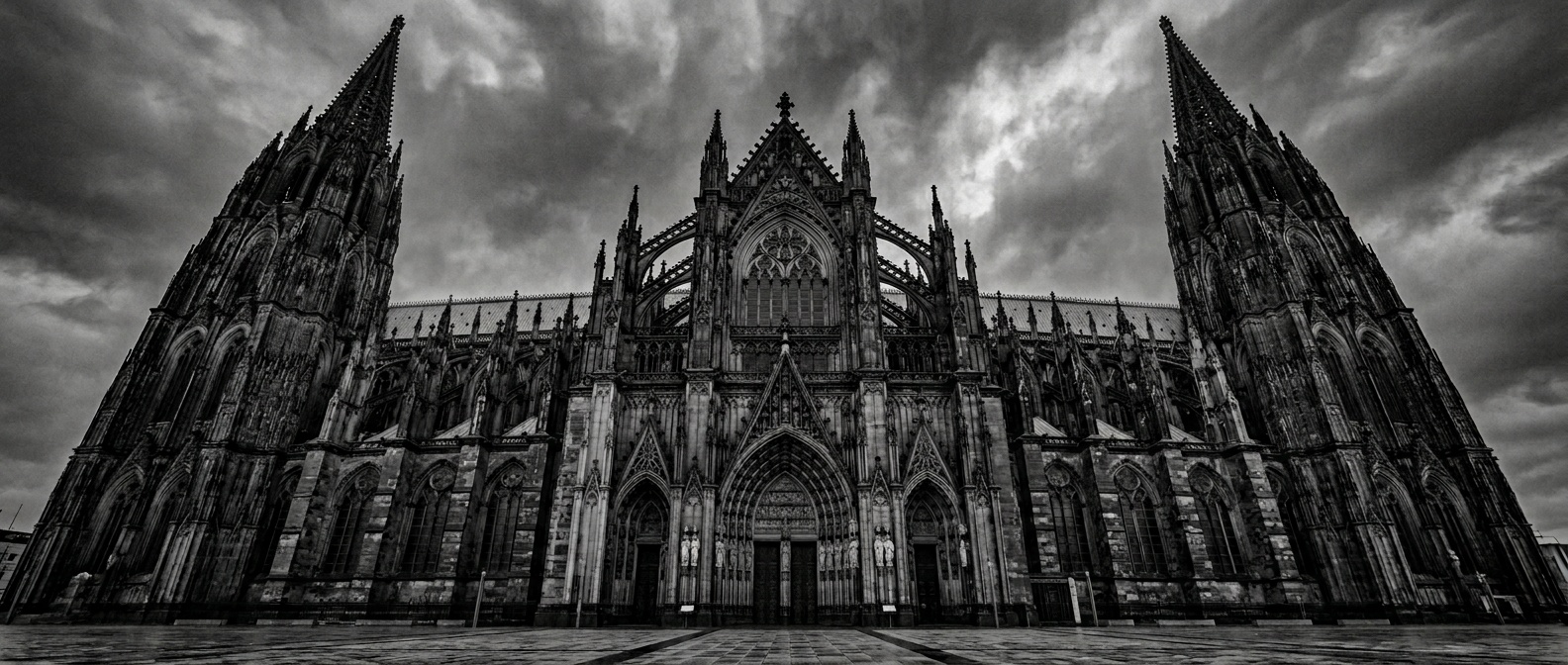
Why old stones comfort us
The Pyramids of Giza. The Colosseum. The Parthenon. Romanesque churches in Tuscany. What these buildings share: their beauty doesn't exist despite aging — it exists because of it. The warm golden surface of aged limestone, the gentle irregularity of weathered sandstone — these aren't defects. They are traces of a history that no new material can offer.
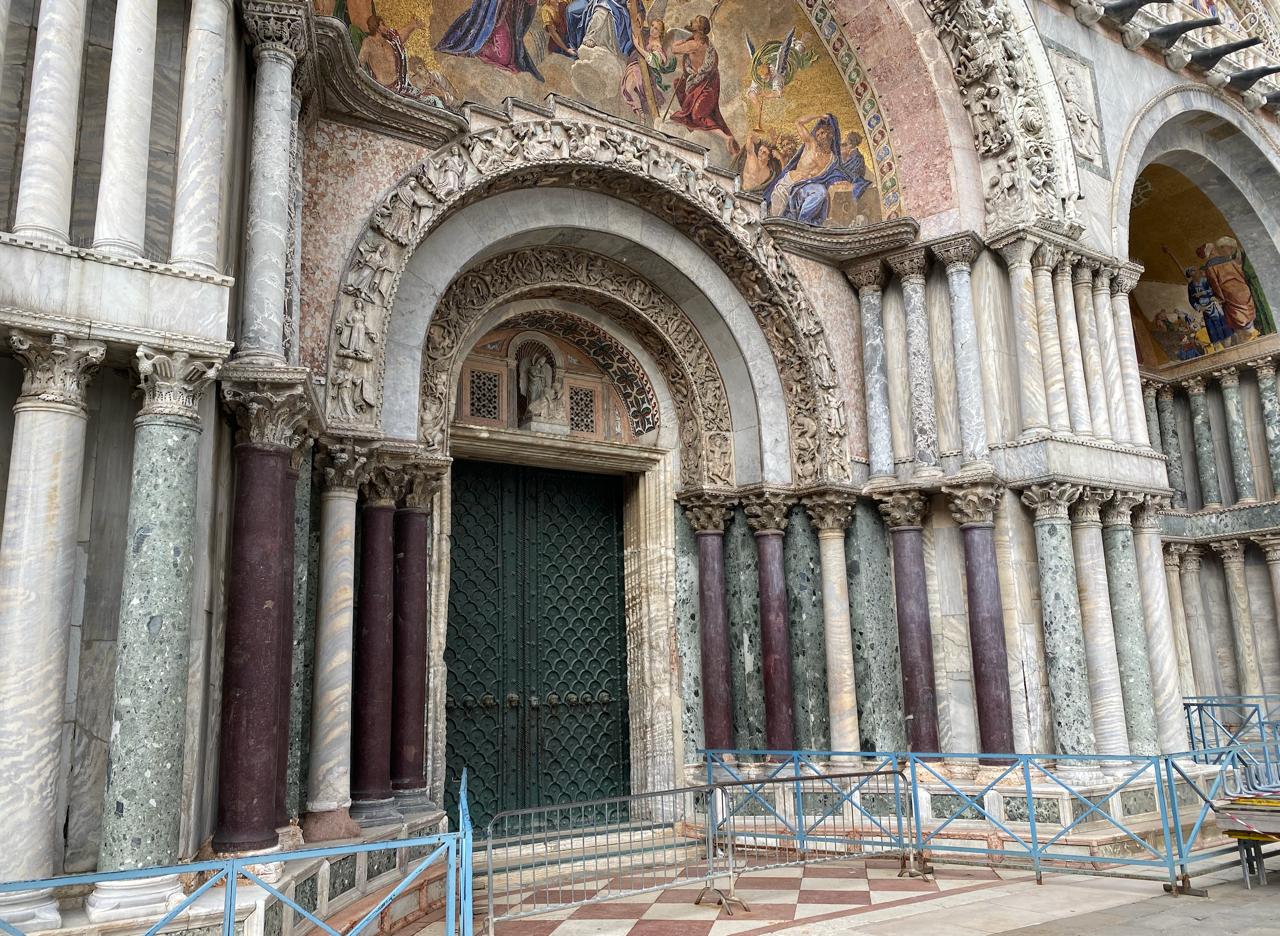
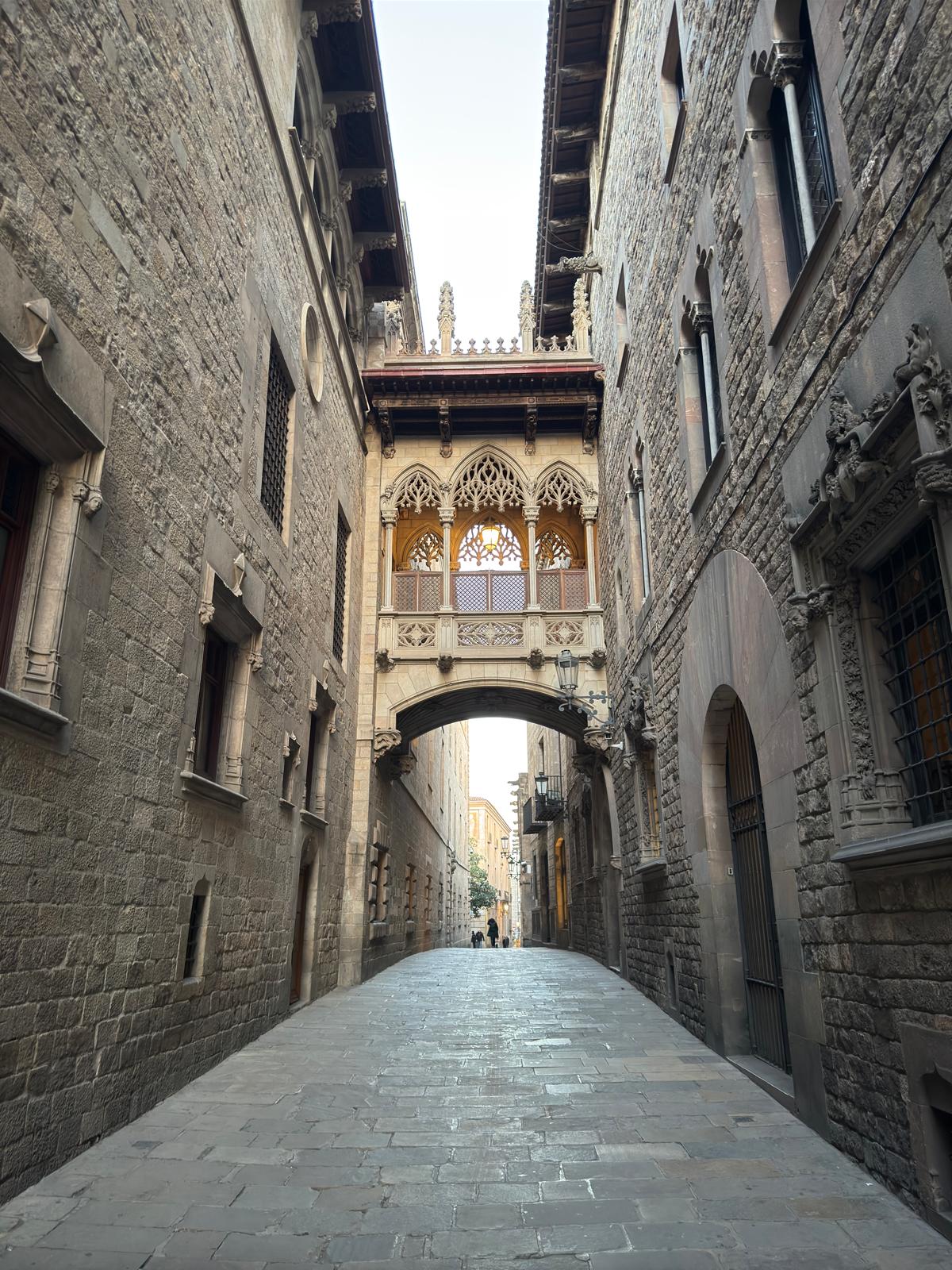
Historic architecture worked with proportions that matched the material. You couldn't cut a 35-meter lintel from a single stone — quarries simply didn't yield pieces that large. So arches were born, cornices, fluting, ornamental bands. Symmetry in small units. Playfulness in detail. This formal language has a calming effect because the human eye is optimized for natural, fractal patterns — environmental psychology studies confirm that complex facades with rich detail trigger positive emotions, while monotonous surfaces generate stress.
In this context, patina becomes part of the narrative. The dark shadows in the joints, the moss growth on the parapet, the lime streaks below the gargoyles — they complete the picture. They give the building a status: I have been here a long time. I am a constant. The building has earned its patina, because it accumulated it over centuries.
The moment patina becomes contamination
Modern architecture speaks a different language. Reinforced concrete dissolved the dimensional constraints of stone. Suddenly, spans of 30, 40, 50 meters were possible — and architecture celebrated this freedom. Clean lines, large surfaces, minimal profiling. Precise joint patterns. Tall window fronts. Ground-floor ceiling heights of seven or eight meters.
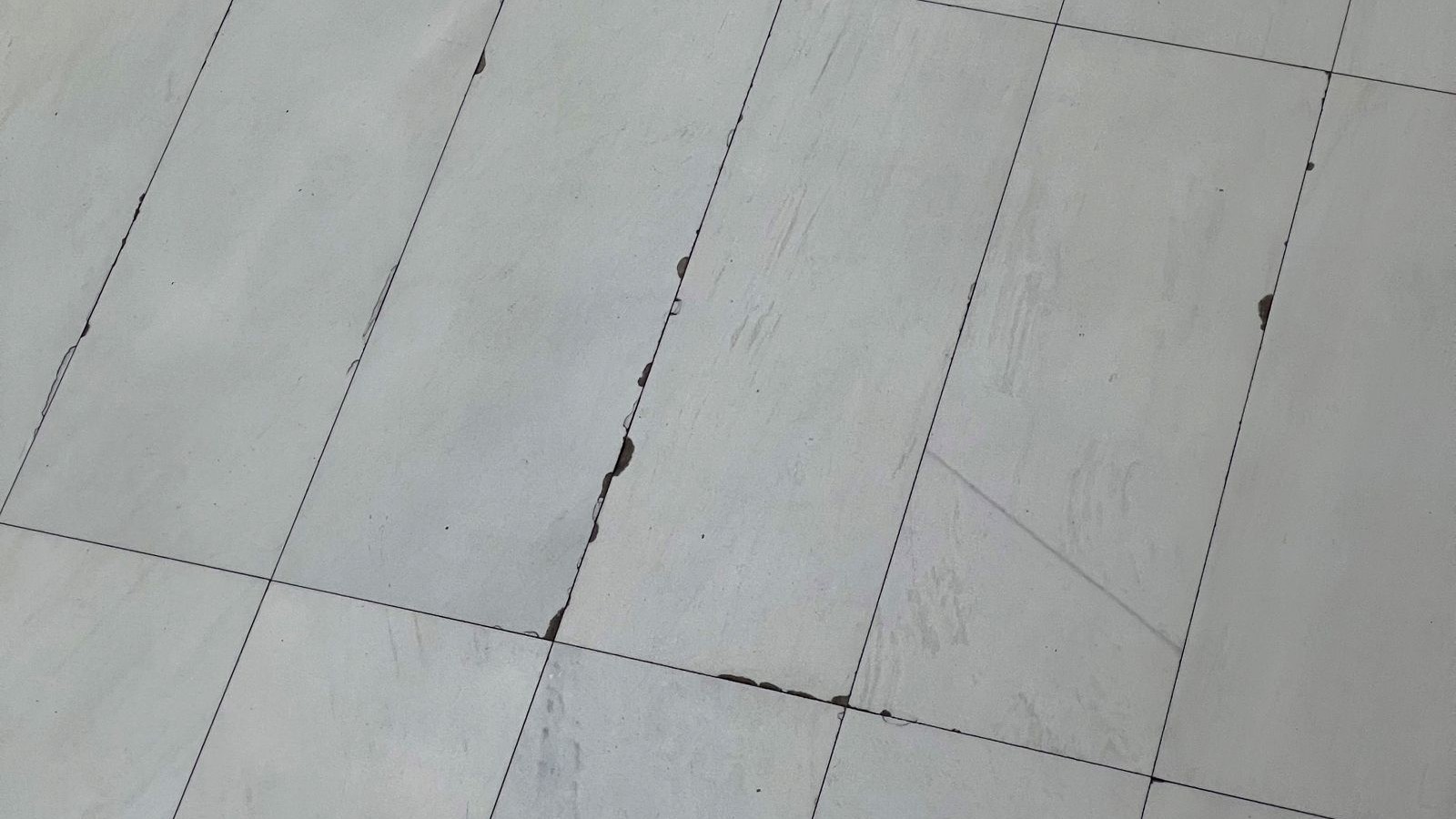
This design language demands purity. When a design is built on precision — on exact panel formats, on the tension between glass and stone, on the impact of a continuous joint line — then any deviation is disruptive. A greenish discoloration on the north facade is not patina. It's a breach in the design intent.
The human eye registers the difference instantly. With a historic building it sees: ornament, depth, history — and categorizes the discoloration as part of it. With a modern building it sees: clarity, precision, perfection — and registers the discoloration as a flaw. Not because the stone ages differently. But because the architectural language creates a different expectation.
The consequence: anyone who designs a natural stone facade with clean lines also takes on responsibility for its long-term visual condition. Facade maintenance isn't optional — it's a design consequence.

A scandal at the British Museum — and what it teaches about patina
In 1937, the British Museum decided to clean the Elgin Marbles. The Parthenon sculptures, housed in London for 130 years, had developed an orange-brown patina. Lord Duveen, an art dealer and benefactor, had donated a new exhibition wing and wanted the sculptures displayed in pristine white.
The cleaning was brutal. Copper tools and carborundum abrasives removed not only the patina but also parts of the original stone surface. When the scandal became public, the Greek delegation called the result a catastrophe. One horse head, they said, was so disfigured it looked Roman. The keeper of the Greek and Roman department was demoted. An internal report called the museum leadership's official explanations a farce.
The irony: the same sculptures that had suffered under smog and acid rain in Athens were more severely damaged in London by the attempt to improve them than by centuries of natural weathering.
The lesson remains relevant today: cleaning without understanding the material and its history destroys more than it preserves. That applies to ancient sculptures just as much as to a natural stone facade from the 1990s.
When is it damage — and when is it just contamination?
Before cleaning, there must be diagnosis. Not every discoloration is the same, and not every one demands the same response.
Natural patina. Limestone develops a calcite layer that slightly changes its tone. This process protects the stone and is not a reason for cleaning.
Biological growth. Algae, lichen, moss — greenish or black deposits in damp, shaded areas. The cause is always moisture plus organic substrate. Eliminating the moisture source (drip edges, drainage, cutting back vegetation) reduces growth permanently.
Black crusts. Sulfur dioxide from combustion reacts with limestone to form gite that binds soot. Unlike natural patina, these crusts are aggressive — they penetrate the pores and accelerate decay. In European cities, they are a legacy of the 20th century.
Metal dust deposits. External sources such as construction sites, welding, or road traffic deposit metal dust that produces rust-like stains. Without knowledge of the surroundings, the cause often goes unrecognized.
Chemical mistreatment. Acidic cleaners on limestone etch the surface and make it more susceptible to future contamination. The rule: no cleaning agent without material identification.
The key point: cleaning without diagnosis is treating symptoms. Anyone who wants to remove a discoloration must first understand the cause.
What works — and what it costs
Construction beats chemistry. Drip edges, parapet capping, functioning drainage — these details determine longevity more than any impregnation.
Hydrophobic impregnation — a water-repellent treatment using silanes and siloxanes that penetrate the pores without blocking vapor diffusion — extends service life considerably. 5 to 20 EUR per square meter, renewal every 8 to 10 years.
Steam cleaning uses 95 °C steam at low pressure. Removes biological growth and surface contamination without mechanical stress. The first choice for regular maintenance.
Laser ablation — a process in which focused light energy vaporizes dark deposits layer by layer — is now standard in heritage conservation. Used on Milan Cathedral since the 1990s. Applied to the Brandenburg Gate during its most recent restoration. Rarely necessary for modern facades, but the most precise method for stubborn black crusts.
Regular maintenance is the most cost-effective long-term investment in facade construction. Neglecting it means paying many times over at the next restoration.
Facade documentation across the entire lifecycle
DDL digitally documents every panel of a facade — from block assignment through dimensions to installation location. For each facade panel, measurement values recorded for quality assurance during production can be stored, as well as the quarry area the slabs were sourced from. Additionally, the system documents which impregnation agent was used, when the last sealing took place, and which surface finish was applied. When cleaning or restoration is needed decades later, the system provides the complete treatment history of every single panel.
Plan facade projects digitallyThe facade as a promise
Natural stone ages. Whether that aging is perceived as patina or as damage is not decided by the material — but by the architectural language it is embedded in.
Historic buildings earn their patina through proportion, ornament, and history. Modern facades must earn their purity through maintenance and planning. The responsibility for that doesn't start with the building manager — it starts with the design. Drip edges, material selection, ventilated cavities, maintenance concepts: answering these questions during construction means not having to answer them again at the first restoration.
What John Ruskin wrote in 1849 still holds true: restoration — in the sense of recovering an original state — is an illusion. What works is care. Regular, systematic, tailored to the material. 1 to 2 percent of construction costs per year. That is the most cost-effective long-term investment in facade construction.
Questions about facade projects are answered by Jan Keller.
Related: Why Natural Stone Projects Fail — Before the First Cut
Explore DDL Solutions
Planning a facade project?
Jan Keller shows how DDL maps facade projects from panel selection to documentation. One conversation, 20 minutes.