Servication
Delivering material on its own is no longer enough. Anyone selling stone professionally today hands over the slab together with its data, accompanies the natural stone project over years, and provides verified documents at every stage. Servication is the word for this service — coined by DDL, derived from the term Servitization (Marabelli, Confindustria Marmomacchine).

Servication in 30 seconds
Servication describes the practice in which stone producers and fabricators extend their material delivery and slab processing with continuous, digital service data. The material gains a history. Every slab is linked to its own data, documented through installation and beyond.
Servication is a working term, not a marketing word: professional documentation of stone fabrication. From the block in the quarry to the installed slab, with all the data in between.
Where the word comes from
Marabelli's Servitization
In April 2026, Flavio Marabelli, Honorary President of Confindustria Marmomacchine, describes in Stone Times a shift the Italian stone industry has been living for some time: machine builders no longer sell pure machines, they sell strategic partnerships with integrated services. He calls it Servitization.
The translation gap
Servitization does not translate cleanly into many languages. The term describes a sum of things — material, data, accompaniment, commitment — and in everyday industry language, a fitting technical term for that sum is missing. That is why we coined our own.
Five pillars, one word
Servication carries five pillars at once: Service (advice, accompaniment, a relationship over years), Operation (the actions on the stone from quarry to installation), Notification (data that travels with the stone), Certification (formally verified material information) and Application Monitoring (the continuous observation of stone in use — condition, performance, intervention needs over the project lifetime).
The five building blocks of Servication
1. Slab Data Layer. Every slab carries its digital master data: dimensions, block of origin, range, visible features, treatments, defects, where applicable a carbon footprint, project assignment during fabrication, surface treatment and so on — material and metadata become a digital unit.
2. Replaceability through Range Knowledge. Servication does not end with the first delivery. When a slab is damaged during installation or even years after laying, range documentation determines how quickly and how purely a replacement can be sourced. Range knowledge becomes a service promise.
3. Live Inventory Access. Fabricators, architects and clients want to see the stock, not have it described. Live Inventory Access means: checking at any time and from anywhere which slabs are available, what properties the materials have, what dimensions. Every stone slab carries its data — and that data is passed on at the point of sale.
4. Project-Bound Documentation. For each project, range, EPD and carbon footprint documents are generated and shared between architect, client and fabricator. From 2027, the EU plans to introduce the DPP (Digital Product Passport, EU CPR) — making it straightforward to meet the requirement and to have the right sales arguments at hand at the same time.
5. Multi-Year Accompaniment. Contracts often run over years, the order itself usually does not. After handover, the supplier remains the contact for extensions, repairs, maintenance and questions. Service as a relationship, carried over years.
What DDL contributes
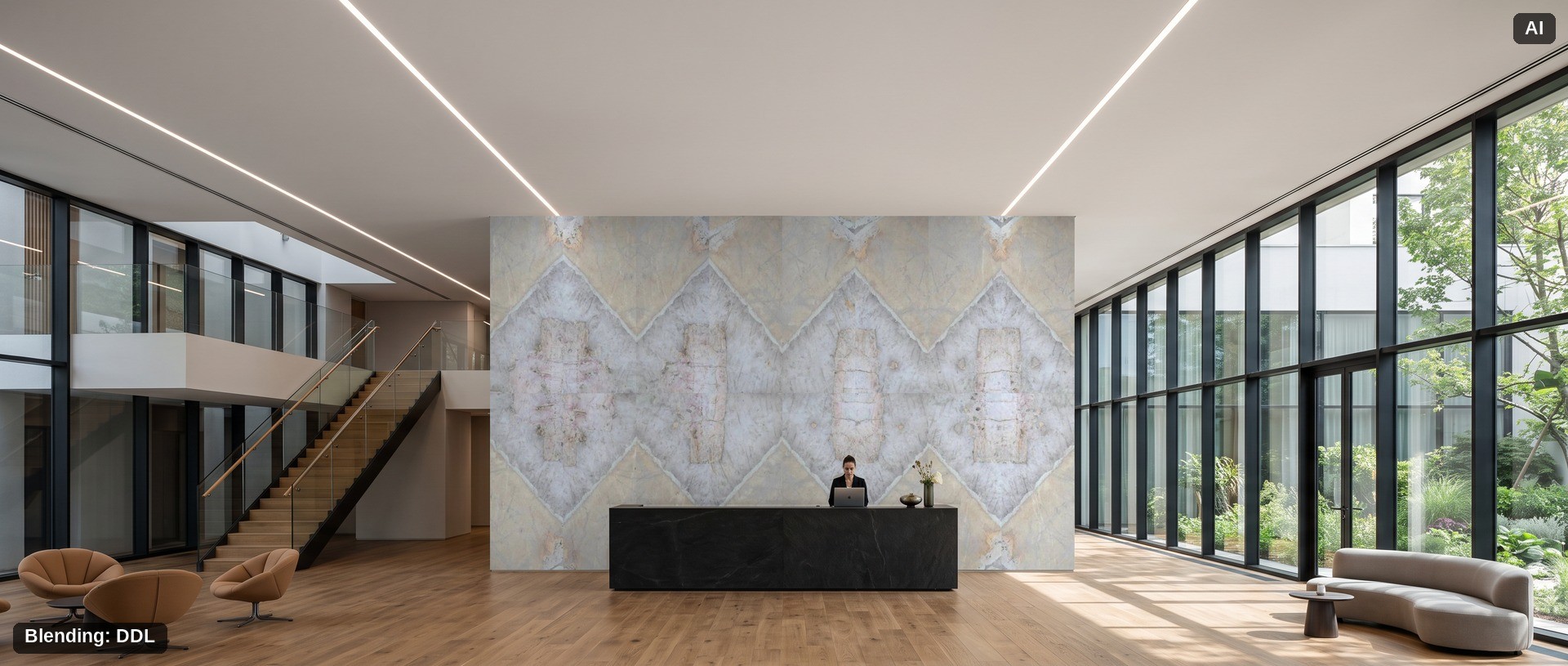
DDL (Digital Dry Layout) is the software in which Servication is already a reality for stone fabricators today. From the option of 3D block scanning in the quarry to mm-accurate slab imaging and dimension capture, range mapping of every delivery, cutting optimisation per order, all the way to block-to-slab traceability years after installation — these building blocks are not theory, they are working tools for our customers.
Learn more about DDLWhere Servication does NOT belong
Not stone care or restoration
These terms are owned by others: restoration, sealing, polishing. Servication is not a synonym for cleaning or maintenance work on existing stone.
Not machine maintenance
Flavio Marabelli's Servitization addresses machine-builder service at the top of the industry. Servication addresses the material and fabrication service layer underneath.
Not generic service
Servication is tied concretely to the five building blocks, not to courtesy phrases or generic service promises.
A term for a shared language
DDL coined the term Servication because we see it daily in our customers' models. But the concept is open. Anyone who carries it forward benefits from the industry finding a shared language — and with it a shared expectation of what material delivery will mean in the years ahead.
Flavio Marabelli's words from the Stone Times interview in April 2026 sum it up:
"Italian companies are no longer merely producers of goods; they are market leaders as strategic partners providing integrated product-service solutions."
What he describes for the Italian machinery industry applies one layer down to stone producers and fabricators as well. We name it in a single word: Servication.
For a deeper background: The Digital Product Passport for natural stone from 2027 is the regulatory bracket around Servication. The eight warehouse-management pain points describe the operational pain that Servication addresses. And the digital jobsite scan shows a concrete application of the service layer in the architect workflow.
Servication in your own operation?
Jan Keller shows what Servication looks like in practice — from digital capture in the quarry through ongoing range documentation to accompaniment years after installation. A 20-minute conversation.