The Stone Is Not the Problem — Why Installation Determines Project Success
Material and design are approved, the budget is released — and the project still goes off the rails. Natural stone is unforgiving. A mis-cut slab is an irreversible loss. The root cause is almost never the stone itself, but everything that happens between fabrication and the job site.
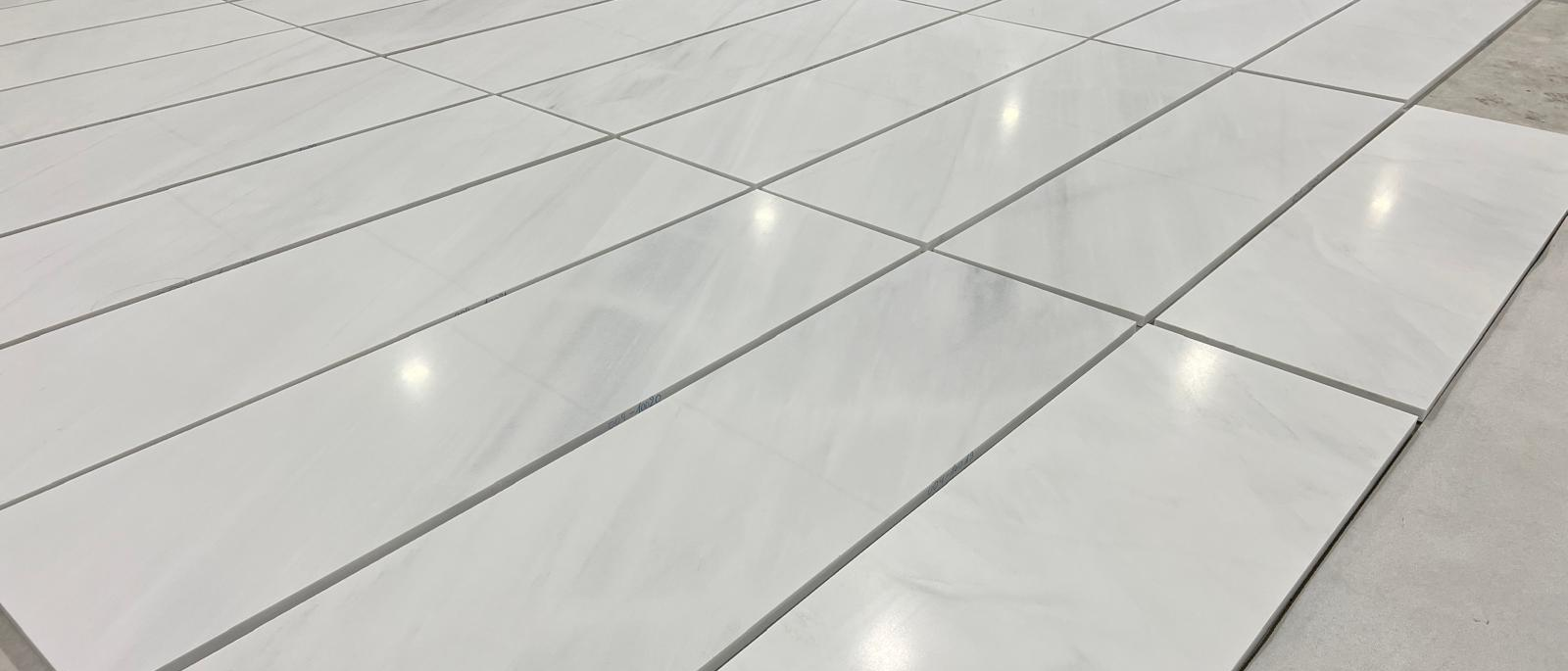
Premium Stone, Imprecise Execution
An architecture firm specifies Arabescato for a hotel lobby. The slabs come from a quarry in Carrara, are cut in Italy, and shipped by container to the job site. The material runs six figures. The design has been signed off.
On site, it turns out that several slabs do not fit. Some were fabricated incorrectly; others show veining patterns that fall outside the approved range. The installer faces a problem that cannot be resolved on location — because every natural stone slab is unique. A mis-cut Arabescato slab cannot be reordered like a tile from a catalogue.
The industry knows this well: most project problems do not start with the material. They arise at the handoff points — between site measurements, field changes, and the cutting schedule. Between fabrication and installation. Between what the architect approved and what arrives on site.
Three Critical Handoff Points Where Projects Lose Control
Site Measurement → Cut Planning
Site drawings are translated manually into cut lists. Every interpretation is a potential error. Dimensions are read, transcribed, rounded. Even when digital files exist, machine settings are often entered by hand. The result: the fabricator cuts what was understood — not what the architect intended.
Fabrication → Installation
In the industry, all slabs are numbered — but that numbering is done by hand. Labelling errors occur and only surface at the job site. Digital planning combined with digital quality management — where every cut slab is uniquely identified via photo — enables the installer to react immediately and deliver a flawless finished surface.
Specification → Reality
Under schedule pressure and tight delivery windows, materials are sometimes installed that do not match the approved range. The on-site decision — leave it or pull it, reorder new slabs — pushes the timeline further. Architects and designers are often left accepting, reluctantly, that the finished result does not match their original vision.
Digital Project Planning — Before the First Cut
In a fully digital production workflow, every step is documented and traceable — from slab selection through cut planning to CNC export. Slabs are fabricated precisely because the input data is correct. Cost savings across planning, material, and production can reach 20 percent or more.
What matters is data continuity. When the site drawing serves directly as a machine-readable cutting template, manual interpretation is eliminated. Cutting tickets are extracted automatically from architectural files — including per-piece area calculations. Modern CNC machines achieve tolerances of 0.1 to 0.5 millimetres. But that precision only delivers results when the input data is accurate.
Today, post-construction site measurement is also possible digitally. These surveys achieve a high degree of precision and can be overlaid with the existing plan. Where deviations arise, the digital model is updated — and the system flags exactly where blending corrections are required.
International projects benefit most. When architects, fabricators, and installers in different countries work on the same project, a shared, current data set is not a question of efficiency — it is a prerequisite. Changes are synchronised, not forwarded by email.
Production + Quality Control — From Cut to Delivery
Example: a fabricator cuts 180 slabs for a facade project. Every cut is documented step by step. Quality inspections take place at multiple stages — after cutting, before further processing, and before dispatch. Waste is recorded per batch so that the final costing reflects actual material consumption. DDL maps this entire production workflow — including CNC-compatible DXF export.
Explore the Production WorkflowHow Digital Planning Changes the Workflow
Machine-Readable Cut Data
Digital files replace manual dimension transcription. The fabricator executes rather than interprets. The error source of "drawing-to-machine translation" is eliminated — along with the majority of recuts that stem from misunderstandings.
Precise Digital Traceability
Every slab has a digital history from goods receipt to delivery. Barcode tracking records location, status, and assignment. On site, the installer knows exactly which slab belongs to which position — rather than searching through paper records or spreadsheets.
Quality Control at Every Stage
Quality inspections are built into the production workflow — after cutting, before further processing steps, and before dispatch. All downstream production steps through to the finished piece are documented. Defects that only appear on site cost multiples of their initial value — with natural stone, often the full replacement cost of the slab.
The Most Expensive Mistake
The most expensive mistake in a natural stone project is not choosing the wrong stone. It is cutting the right stone incorrectly. And that rarely happens because of poor craftsmanship — it happens because of missing data between the parties involved.
Digital tools close that gap. From site survey to installation, everyone works from the same current data set — changes are synchronised, not chased down by email. Errors are caught before they become costly. And the stone ends up exactly where it belongs — not in the waste pile.
Further reading: Digital Layout Planning, Natural Stone Inventory Management and Software for Stone Fabricators.

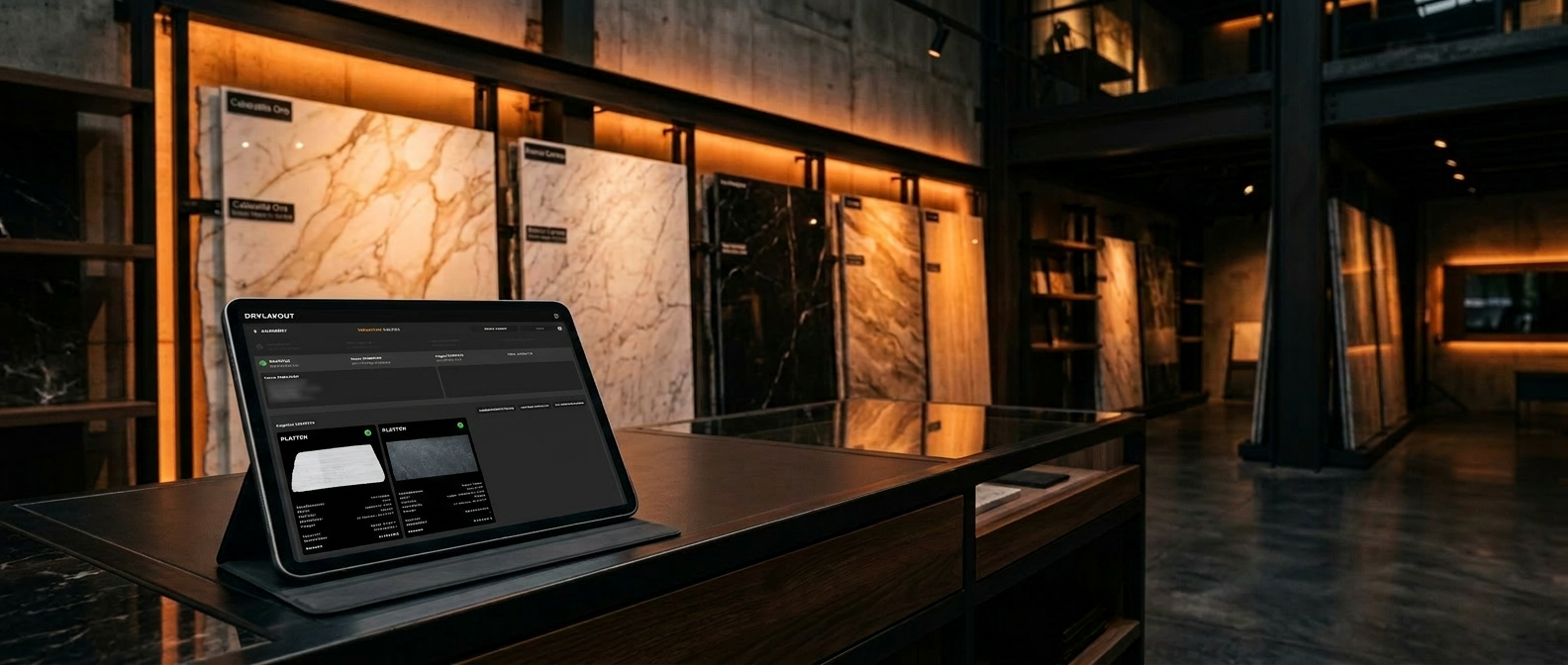
From Cut to Installation — Digitally Controlled
Jan Keller walks through the full production workflow in 30 minutes — from site measurement to quality sign-off. Practical, with real project data.