Natural Stone Veining: Why Slab Position and Light Belong Together
Natural stone can create a majestic impression in hotel lobbies and large spaces. The same stone appears restless in stairwells or smaller rooms. The difference lies in how light hits the surface and how the slabs are positioned relative to their proportions. Veining is not a static pattern — it develops its own vitality through the interplay with light in the room.

Natural stone and its emotional impact on the viewer
Natural stone has a property that no industrially manufactured material can offer: every slab reacts differently to light. Stone slabs on a wall with side lighting show depth, movement and contrast. The same slab in a wall design without accentuated light appears flat and undifferentiated.
The reason lies in the physics of the surface. Raking light — light hitting the surface at an angle of 30 to 45 degrees — highlights every irregularity, brings shadows into the grooves of the veining and makes it appear three-dimensional. Frontal light, on the other hand, flattens everything. The veining is still there, but it loses its dynamic effect.
With ceramic tiles, this barely matters. The surface is uniform, the pattern reproducible. With natural stone, every slab is unique. The position in the room determines whether veining works as a design element — or disturbs as visual noise.
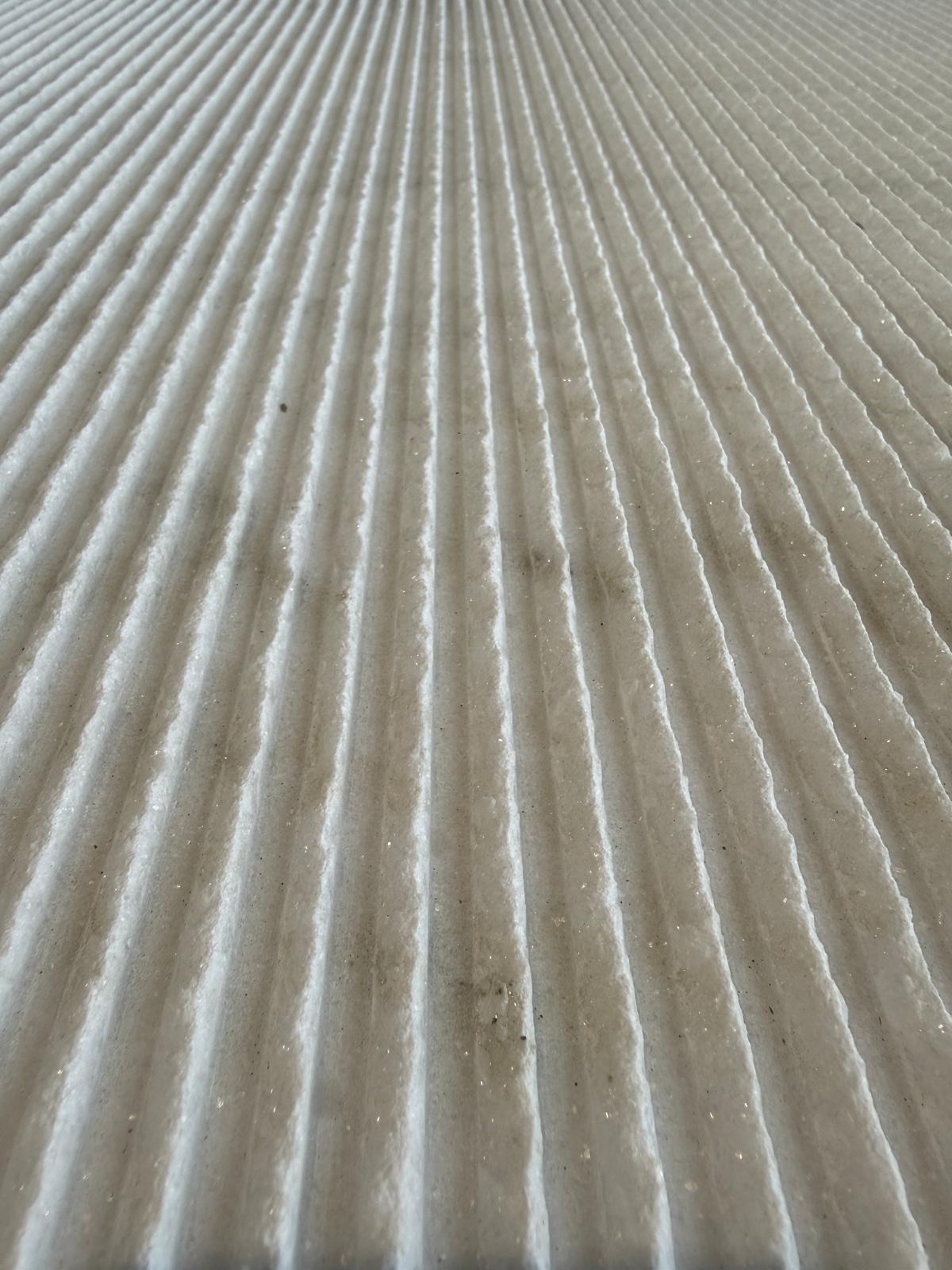
Raking light reveals the surface structure of natural stone — each groove casts its own shadow.
Three factors that determine the visual impact
Light direction
Natural side light through large windows brings stone surfaces to life. Warm white (2700–3000 K) enhances earth tones in travertine and onyx. Neutral white (3500 K) reveals the crystalline structure in white marble without distorting colours. A CRI value above 90 is essential for accurate colour rendering on stone.
Veining direction
Horizontal veining visually stretches a room and works well for long surfaces. Vertical veining adds height and works in rooms with lower ceilings. The orientation of the slab and the proportion of veining must match the room concept — and should be planned carefully before cutting.
Surface finish
Polished granite reflects up to 70 percent of incident light — with marble, the value varies depending on polishing level and mineral content. The room appears brighter, the veining more contrasted. Honed surfaces absorb light — the effect is warmer, calmer and more subtle. The choice of finish changes the room atmosphere as much as the choice of stone itself.
From slab layout to spatial experience
In the natural stone industry, there is a term for what distinguishes a planned space from one that was randomly laid: a harmonious slab layout. It is achieved when the veining of the material is consciously guided — when veins and layers work with each other rather than against, when dominant areas sit where they strengthen the room rather than disturb it.
German stone specialist Uwe Petry puts it aptly on his website: a professionally planned slab layout is recognisable by "the fact that it wasn't just installed, but planned." This means: colour tone, grain, veining, movement and structural direction of each individual slab are examined before cutting begins. The result remains harmonious in every light mood — in morning daylight, in evening artificial light.
An often overlooked factor is the crystalline structure within natural stones. Depending on how the crystal lattice of a slab was cut, a different reflection effect occurs. For homogeneous wall surfaces, it is essential that slabs come from blocks quarried in the same area and cut in the same direction on the gang saw. This avoids a sudden shift within the crystal lattice. In a digital dry layout, this can be identified by the proportions of the veining and the overall character of the material.
Digital blending transfers this planning process to the screen. Real slab photos are positioned to scale on the project surface. Veining patterns can be checked across multiple slabs. Dominant areas can be moved without physically handling a slab. The effort: minutes instead of hours.
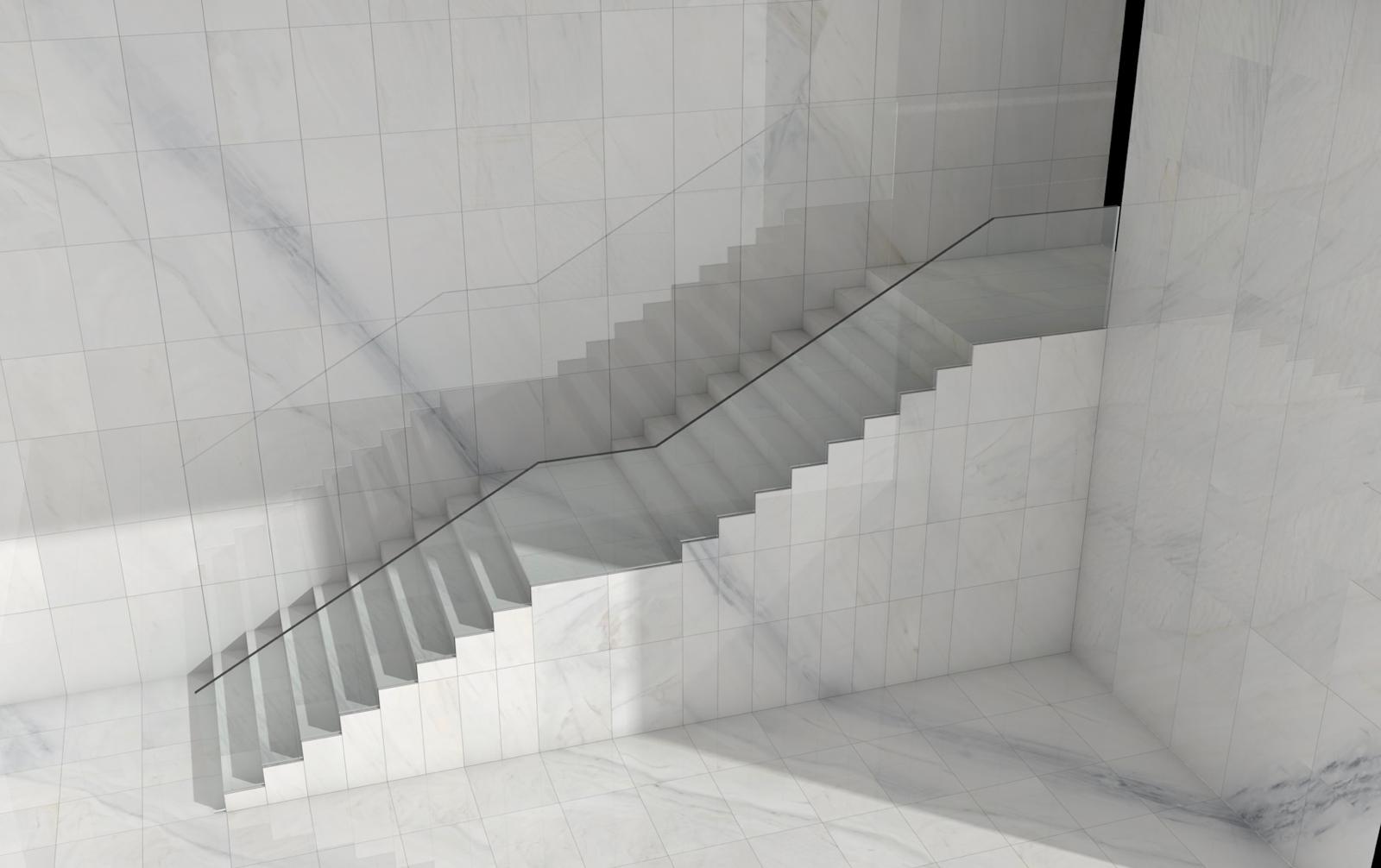
Light direction and slab positioning determine the spatial impact — shown here in a marble-clad staircase.
Digital Blending — Veining as a Design Element
Example: When planning a lobby, the wall opposite the window front will receive the strongest light. In digital blending, the slabs with the most distinctive vein patterns are positioned precisely there — as a focal point that captures attention and gives the room its architecturally intended depth. More subtle slabs fill the surrounding side walls. With DDL, this entire planning process can be mapped — from the digitised slab to final approval.
Explore project planningHow veining becomes a design element
Think range and yield together
The architect defines the range — which veining is acceptable. Every excluded area increases waste. By visualising in a digitally blended plan, material utilisation can be demonstrably and significantly increased. The relationship between range and yield becomes immediately visible — and can be adjusted in the interest of sustainability before slabs are cut.
Position distinctive slabs as focal points
The slabs with the strongest vein patterns go where side light and viewing angle bring the veining to its best advantage. More subtle slabs fill the surrounding side walls. This assignment happens on screen — with real slab photos, positioned to the millimetre on the project surface.
Overall harmony in every lighting condition
Well-planned surfaces benefit from the uniform alignment of the crystalline structure. Light changes — whether seasonal or throughout the day — are reflected evenly everywhere, so that the mood of the room changes harmoniously. A professionally planned slab layout remains consistent in every lighting situation.
The room as a stage for the stone
Natural stone changes with the light — morning, evening, in sunlight, in artificial light. Few building materials respond as strongly to changes in lighting. But this potential remains untapped when slabs are positioned without regard for light direction and room geometry.
The tools for this exist. Digital layout planning makes visible the process that lies between material selection and installation. Veining transforms from chance to design element. And the room gets what the architecture promises: a surface that lives.
Further reading: Digital Layout Planning, Installation and Quality Control and Inventory Management.
Explore DDL Solutions
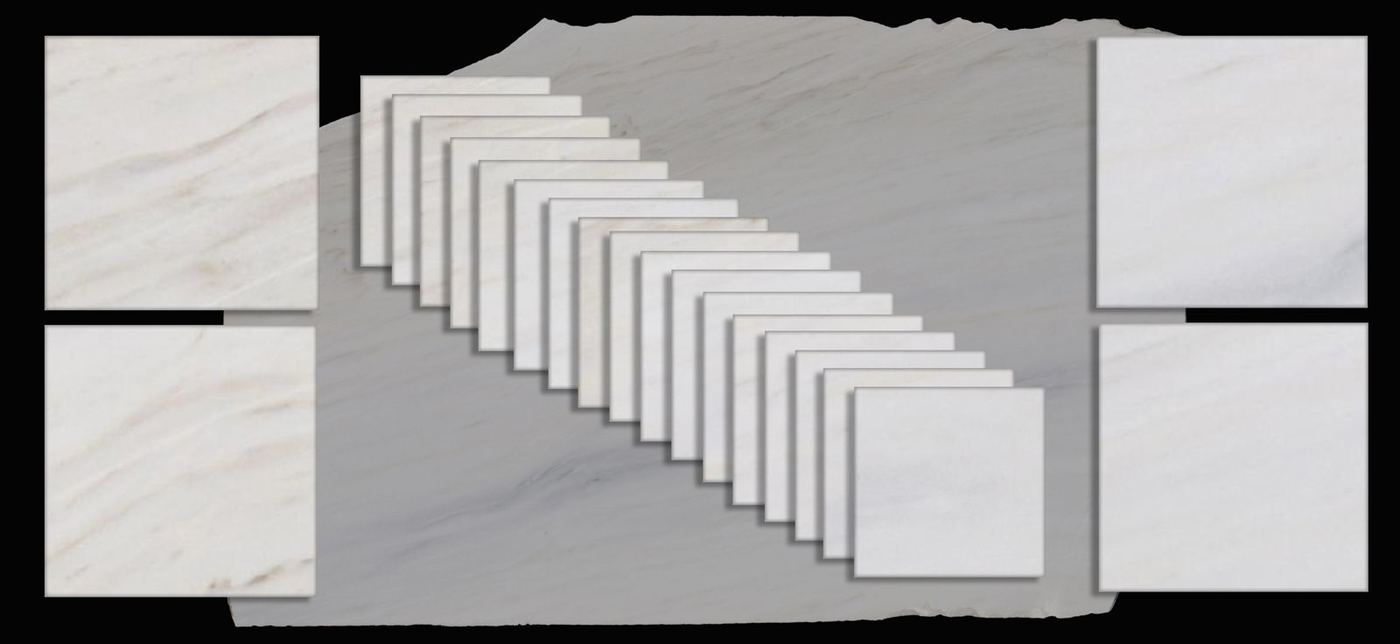


Place veining with intent — see it live
Jan Keller demonstrates in 30 minutes how digital blending works — real slab photos on the project surface, checking veining patterns, assessing light effects. Hands-on, with real project data.