The Natural Stone Labeling Experiment
Barcode labels on natural stone slabs sound like a solved problem. In practice, shops around the world have spent months testing, rejected adhesives, swapped printers and commissioned custom software — before landing on something that works. Five documented experiences and the costs they caused.
A question nobody can answer clearly
In a trade forum for stone fabricators, one simple question has been sitting there for a year. A shop owner asks his peers: "How do you handle the slab inventory and the jobs? Are most of you still working with Excel sheets? Or is there software out there that actually makes life easier?"
The question sounds harmless. It proves something uncomfortable: the industry itself doesn't know what standard looks like. Every shop tries to find its own way. One works with office-supply labels, one uses a handheld for laminated tape, one commissioned a custom software build. No common ground. No norm. No clear steps a successor could follow.
The consequence: every shop reinvents labeling from scratch. Some attempts cost weeks, others months, some thousands of euros. This article shows five documented stories from stone fabricators on three continents — and makes visible what those experiments actually cost.
A month of effort for a simple outcome!
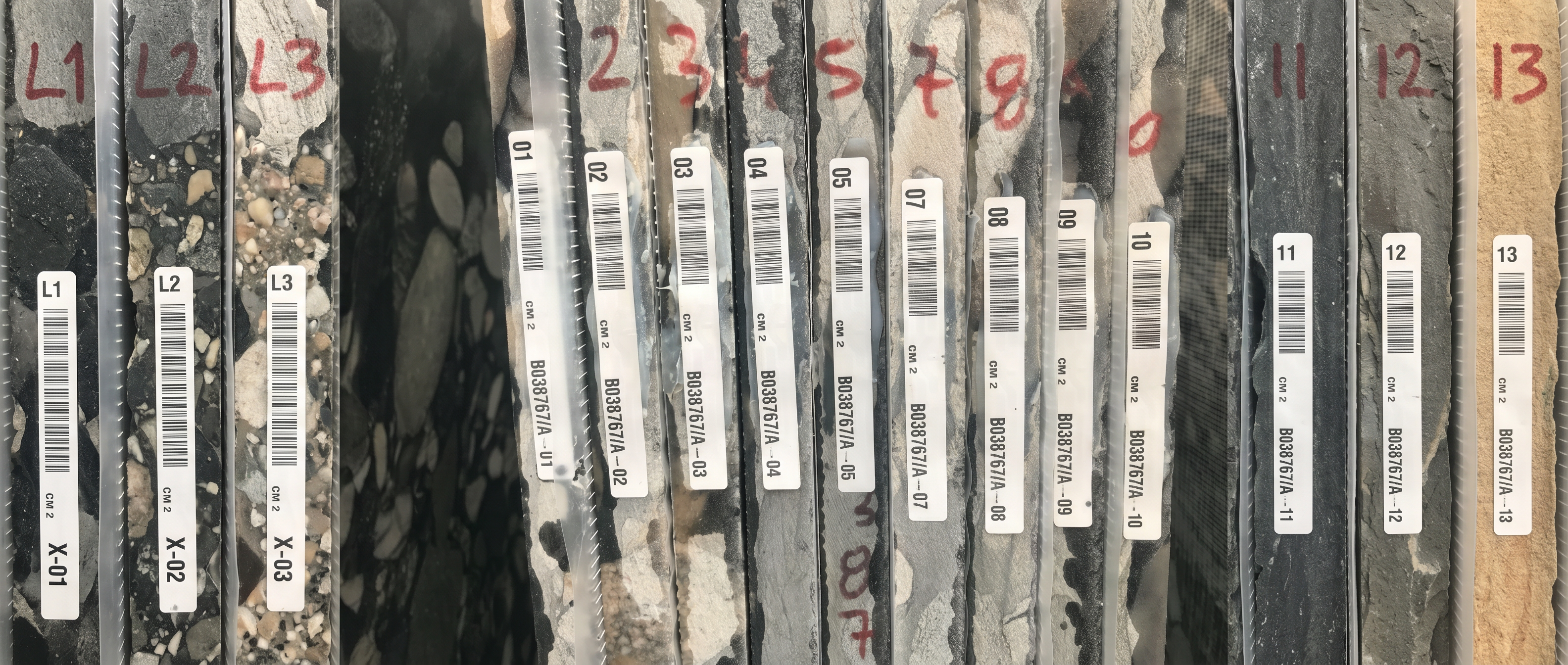
In an industry-wide survey, a US natural stone fabricator describes how he built his barcode system. The answer runs long. The shop first tried to get classic adhesive labels to hold on rough slab edges. Result: they didn't stick. So they went into testing.
"We spent almost 1 month researching and trialing out different media types with different adhesives to find something that would stick to the rough edge of a granite slab but decided on using silicone with the poly tags rather than sticky labels. Fun times …"
A full month. Different materials, different adhesives. The outcome: the shop abandons adhesive labels and mounts plastic tags to the slab edge with silicone. "Fun times" — the sarcasm of an owner who sank weeks of his own time and his team's time into a basic problem.
A German label manufacturer lists stone slabs in its own product category: "difficult surfaces". The reasoning is technical and sober — porous, textured, often dusty. Standard adhesives only partially hold. Spend a month testing and you learn that the hard way.
The bill for this shop: four weeks of a production manager's time and a patched-together fix instead of an industrial solution. Conservatively, a four-figure sum — for labels!
Frozen — a Test Without a Happy End
Another stone shop in a colder region describes its solution in the same survey — and it reads like capitulation:
"We use a Rhino 5200 label maker because our slabs are outside in frigid weather. We use silicone to adhere them to the stone. They're very expensive, but we'll change products this spring when we open our indoor sales office."
A Rhino 5200 is a handheld for laminated labeling tape. The kind of printer a building-services technician carries on his belt. No industrial label printer, no network connection, no database sync. The shop gave up the industry-standard Zebra setup because labels wouldn't hold in the outdoor yard at sub-zero temperatures. Silicone and laminated tape instead of thermal transfer and polyester.
An Italian label-industry blog describes the problem from the other side: "Label application problems are often caused by environmental conditions, particularly temperature and humidity. Where possible, apply labels only in dry conditions at room temperature."
Only — a stone fabricator doesn't get that choice. Slabs come in wet from the gang saw, are stored partly outside, in winter cold, in summer heat. The label manufacturer's ideal condition is the exception in the shop, not the rule.
The bill for this shop: expensive laminated tape, a handheld with no software link, manual capture of every slab. A new system is on hold until an indoor showroom opens in the spring — a year of improvisation.
Why all this barcode effort in the first place?
A US consultant for barcode systems in the stone industry documents in a podcast what one of his customers went through at annual inventory — thanks to the introduction of a barcode system:
"This customer went from taking several people, two, three, four days to get through the shop doing the manual physical inventory down to less than a day because they were able to go out and scan the barcodes."
Before: two to four days of inventory with several employees. Every year. Most shops still run manual tally sheets and Excel lists — a time sink at inventory. A topic that keeps coming up in industry posts on LinkedIn, by the way. A logistics expert writes about similar shops: "Staff spend hours searching for material that is 'in the system' but not where it should be."
The math is simple: three employees, four days of inventory — that's 96 person-hours. At a shop worker's average hourly wage, the cost is in the four-figure range. With barcode: under a day! No calculator needed. Any owner can recite that cost gap in his sleep.
And that's just the inventory event itself. The hidden costs are much bigger: slabs booked as "in the system" but not findable; double sales because reservations run verbally; remnants sitting in the yard that never get used.
The rule is obvious but still happily misunderstood: barcode labels must hold! Otherwise slab chaos awaits. A handbook from a leading material manufacturer nails it: the label on the slab is not decorative. When it falls off, the lot assignment is gone with it. And so is the color consistency across the delivery. The complaint is pre-programmed.
A matter of discipline
The most modern solutions have been on the market for years: QR codes on every slab, linked to an operating system. Photo, dimensions, lot, storage location — one scan, all there.
QR codes are only as valuable as the data captured for each slab. The summary in a user tutorial says it all: "Slab-based inventory management demands a high level of quality awareness and control discipline from the shop, because it depends on the data employees have to enter into the system."
The problem is not the technology. The problem is discipline. Every important movement should be captured. Reservations, sales, storage changes. If an employee moves a slab and doesn't log it in the system, the information is worth only half as much at the next scan. If a remnant isn't created as a new object after the cut, it disappears.
The bill is very hard to express in hours — just as hard as putting a number on lost sales, contested projects and customers who don't come back. But an industry truism captures it: "Knowing what is in stock is mandatory. Using the system tag slabs so they are not double sold." Double-sold — a topic that keeps surfacing and demands a lot from the salesperson in the conversation with the unhappy customer.
What can we learn from these experiences?
Five shops, five stories. Laid out side by side, a pattern emerges.
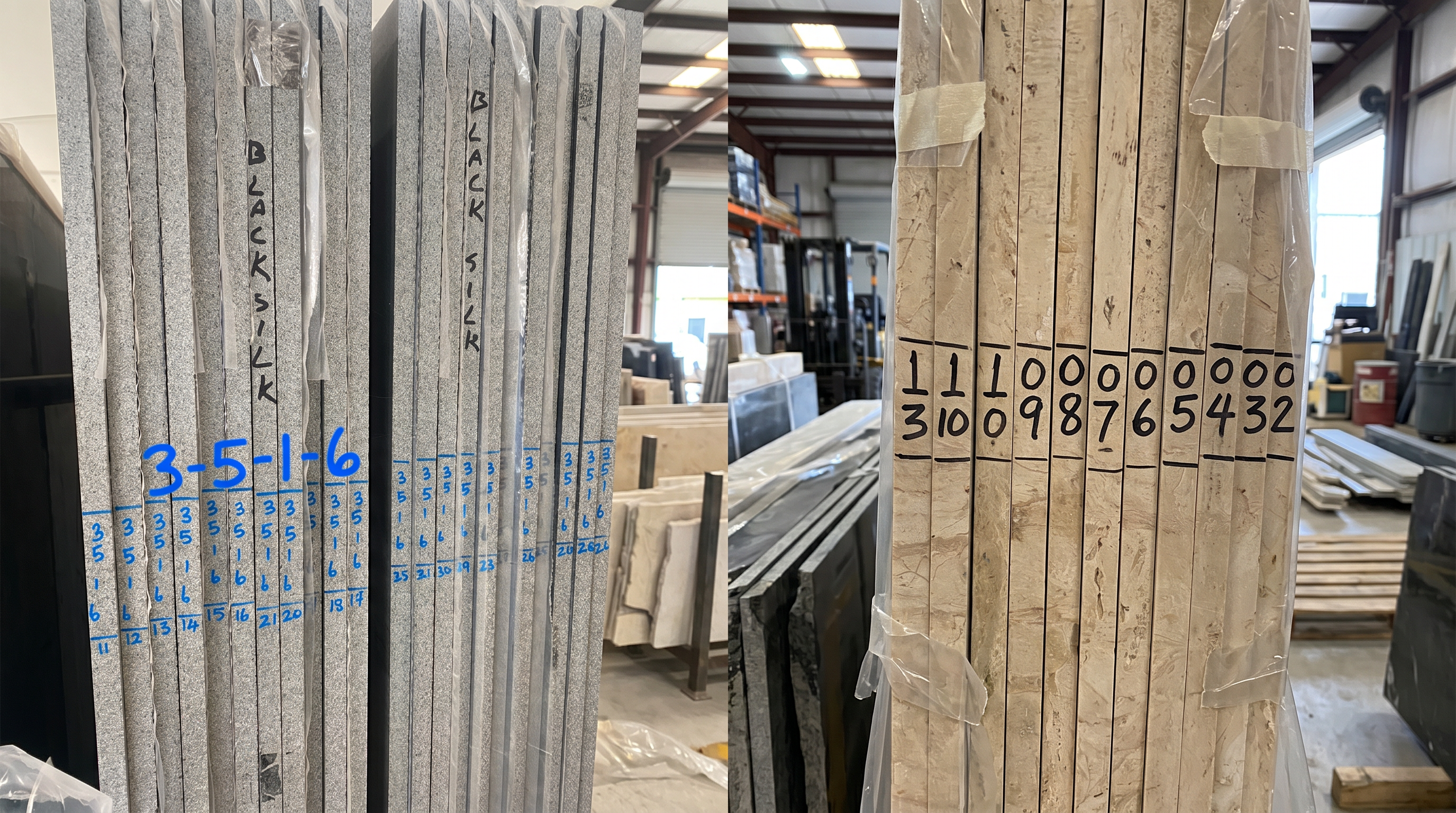
First: the material decides! Barcodes on standard paper labels — printer picked up at the office-supply store — do not hold on a porous, dusty, wet slab edge — regardless of adhesive. Skimp on the label printer and you pay later in test months, staff time and improvised fixes. The right material — polyester with resin ribbon and high-tack adhesive — is known. Most shops still only find it after weeks or months of their own trials.
Second: treat integration as a project. The industrial printer is in the catalogue, the scanner is on the desk. Yet a gap yawns between tablet and printer. Industrial label printers speak a language of their own that iPads and Android devices don't understand. The normal print dialog simply doesn't find the printer. Without a bridge, the system stays a patchwork. So bring in specialists.
Third: without discipline, any system is worthless. The best barcode and the cleanest software fail if the master data isn't maintained. Believing technology alone will fix the warehouse is wrong. Every employee has to be trained in discipline. For the sake of the team.
The stories in this article show one thing: DIY costs. Months, money and the team's patience. For shops that want to learn from these experiences without going through them, there is a ready-made answer. Material, print path, discipline — every point solved, every outcome proven in daily operations.
What the proven solution looks like today is in the second part: Barcode Printer — Experiences with Natural Stone Slabs.
Experiments cost — a considered solution saves
DDL links every natural stone slab with photo, dimensions, veining and range specifications. The barcode on the slab opens the digital passport — reservations, storage location, project history. The Print Bridge solves the path from tablet to industrial printer. No months of testing, no patchwork fix — and still open to any make and to printers and scanners already in the shop.
Explore inventory managementExplore DDL Solutions

Close your own barcode construction site?
Jan Keller shows which printer, which material and which software bridge fit your shop. One conversation, 20 minutes.