Excel Spreadsheets vs. Digital Stone Slab Inventory
Once the owner knew every slab. Today customers expect delivery timelines in hours, remnant dimensions to the millimeter, and real-time availability. Manually managed stone slab inventory systems hit a structural wall — not from lack of effort, but from the wrong tools.

When One Person Held All the Knowledge
The stone slab inventory ran through a single person. Which slabs were where? Which were reserved for which project? Where remnants were stored — all of it lived in someone's head. Physical presence replaced any documentation.
That model is hitting its limits today. Two pressures converge: skilled labor shortages force stone fabricators to move knowledge out of people and into systems. And customers now demand decision speed and precision that would have been unthinkable a decade ago. Delivery timelines in hours, not days. Remnant dimensions on request. Slab availability in real time.
Manually managed inventories can no longer deliver this. The question is not whether the shift is coming — but when.
What Excel Cannot Do in a Stone Slab Inventory
Unique Objects, Not Unit Counts
Excel thinks in quantities. A cell holds "Portoro, 3cm, 12 pieces." What it does not hold: which of those twelve slabs has which dimensions, what visual characteristics it carries, which block it came from, and what price that specific slab justifies. Stone fabricators managing slabs work with unique objects. Every slab has its own dimensions, its own photo, its own veining pattern, and therefore its own value. A spreadsheet cell can store a label — but it cannot evaluate, search, or actively use that slab in a sales conversation.
Reservations Without System Connection
A reservation in Excel can be added as a note. What that does not do: make the information visible across the rest of the business. Quotes, projects, and inventory live in separate files — sometimes on separate computers used by separate employees. The result is familiar to many operations: a slab gets specified in a quote and sold to a different customer at the same time. The error surfaces at pick time — not at quote stage, not at order confirmation.
Idle Stock as a Hidden Cost
Slabs sit in a yard for years. Often only the owner knows which ones have value and which should move. Idle time is tied-up capital — money that was spent, sits on the balance sheet, and generates no return. Without structured visibility, there is no targeted clearance of slow movers, no active use of remnants, and no reliable answer to what is left to extract from a given block.

image_comparison_text
Every Slab Passes Through Stations
Arrival. Quality check. Warehouse entry. Project reservation. Cutting. Delivery. Every slab in an active stone operation moves through these stages — and at every stage something can go wrong if the current status is not known.
Digital inventory tracking for stone means: status is recorded at the moment of the event, not entered retroactively into a spreadsheet. That difference sounds like an administrative detail. In practice it determines whether a promise can be kept.
What customers expect today sounds something like this: "I have 28m² of this material in these formats. Based on your project, we can work with exactly these formats. I can build your bathroom from stock. Give me the chance, and I can have a layout plan ready by tomorrow — showing you exactly how it will look."
That promise requires knowing the inventory in the moment of the conversation — dimensions, quality, and availability. A verbal-based or spreadsheet-based stone slab inventory system cannot reliably deliver this.

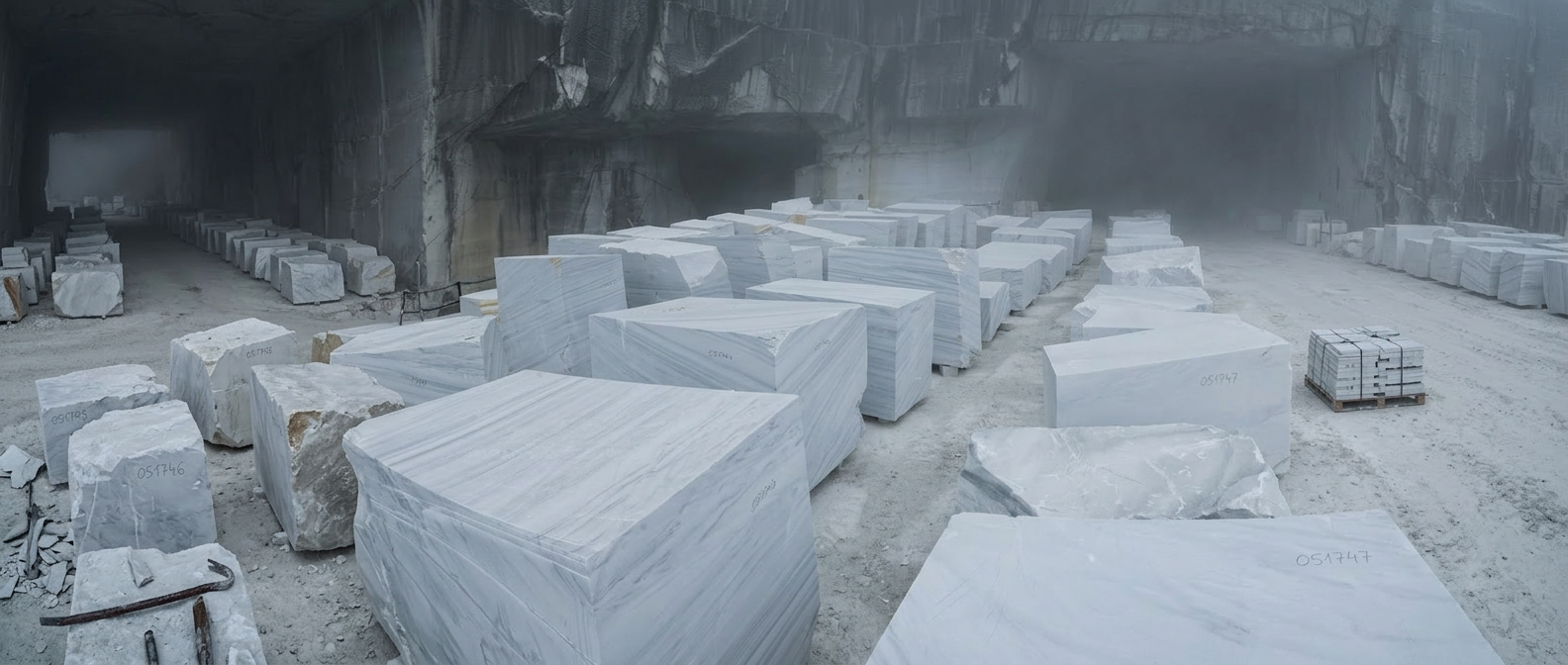
image_caption_aussenlager
Slab-Based Inventory Management — Every Slab as Its Own Object
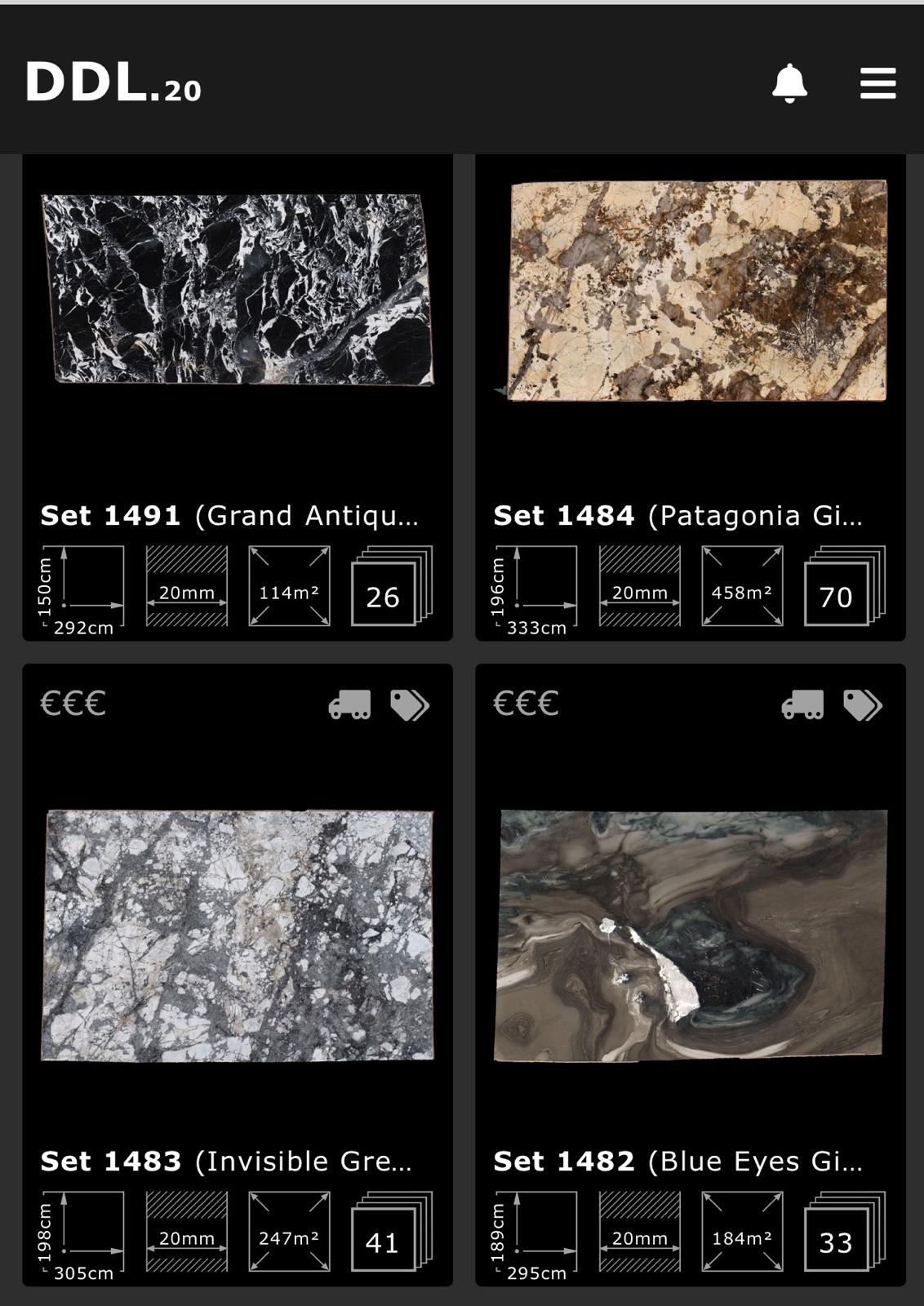
DDL manages every slab as a unique object: with its own photo, dimensions, location, surface finish, and real-time reservation status. As soon as a slab is added to a project, it is immediately marked as reserved in the inventory — visible to every team member, no follow-up needed. The scanner app makes stock audits possible without clipboards: scan barcode, confirm status, move on. Stone fabricators who have switched to scanner-assisted inventory report 85% less time spent on audits. More: slab-based inventory management with DDL.
Explore Inventory ManagementWhen Inventory and Quoting Work Together
Digitization as the Starting Point
Every slab is captured once: photo, dimensions, location, surface treatment, block origin. This can happen with a handheld scanner directly in the yard, or start incrementally with the next inbound delivery. From the first scan, the inventory is structured — searchable, filterable, reportable. What is available in which format can be answered in seconds.
Reservations in Real Time
When a slab is added to a project or included in a quote, it is immediately marked as unavailable in inventory. No other team member can allocate the same slab simultaneously. No phone call required, no checking with the office. The status is clear at the moment the decision is made.
From Inventory Directly Into the Quote
Inventory, reservations, and project planning run in one system. A quote is built directly from available stock — with real slab photos, exact dimensions, and confirmed availability. That gives sales and customer service a foundation where promises are reliable: fast response, accurate pricing, no backtracking after order confirmation.
Speed and Precision as a Competitive Advantage
A digital stone slab inventory system is not an investment in administration. It is an investment in sales capability.
Stone fabricators who can answer inquiries in hours rather than days win projects others lose. Those who can offer concrete plans from available stock — with dimensions, photos, and reserved material — become the preferred conversation partner. Those who need to check the yard first, then call back to confirm a slab is still there, lose trust with the next inquiry.
This does not start with a full system rollout. It starts with the first structured inventory — and the first quote built on real availability.
Explore DDL Solutions

Inventory as a Sales Tool — Practical Start in 30 Minutes
Jan Keller walks through how slab-based inventory management works in a real stone operation — from first scan to first quote built from actual stock.