Small Stone Samples Lie — the Reality Is in the Slab
„I would have rejected my own slab."
This sentence was spoken in a workshop with more than 20 architects. It came from an architect who had just confronted her own sorting result with reality. What happened before — and why this moment changed so much — is the story of this text.
By Jan Keller — Developer of Digital Dry Layout and Stone Consultant for Lasa Marmo
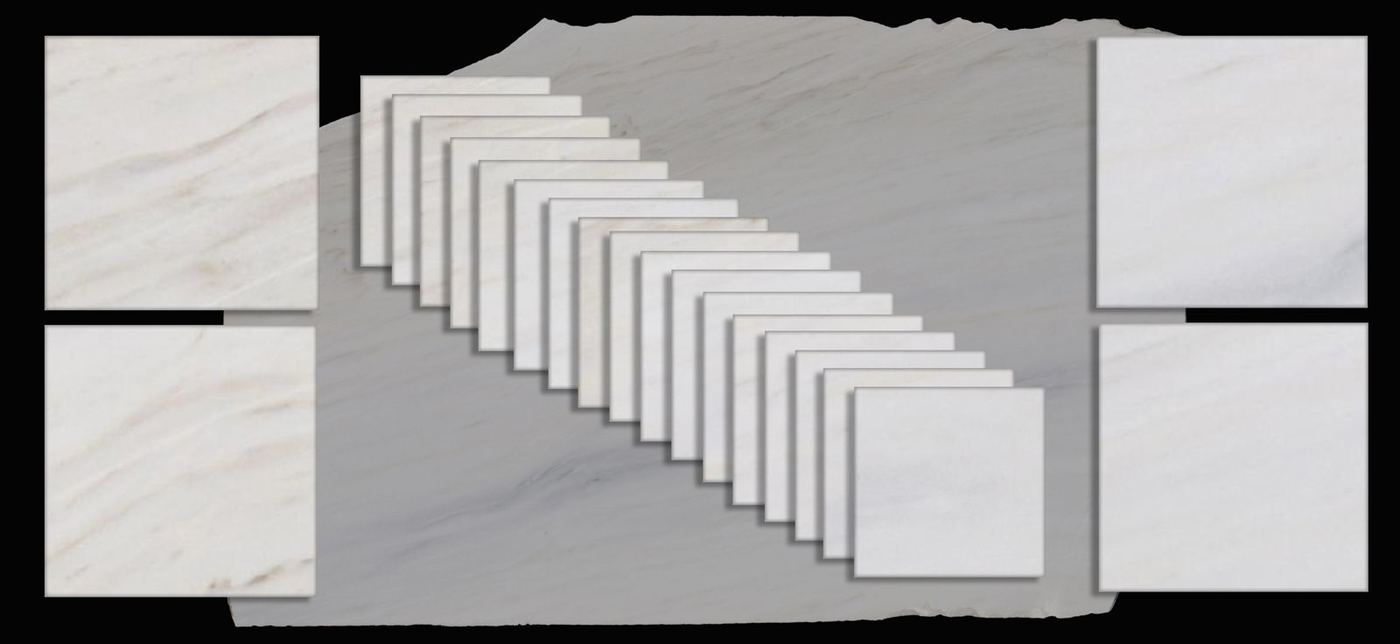
Kleine Naturstein-Muster täuschen: über 20 Sample-Ausschnitte aus einem einzigen Slab Lasa Bianco Vena Oro — das ist, was Architekten beim Sortieren tatsächlich in den Händen halten.
Stone Samples in Action
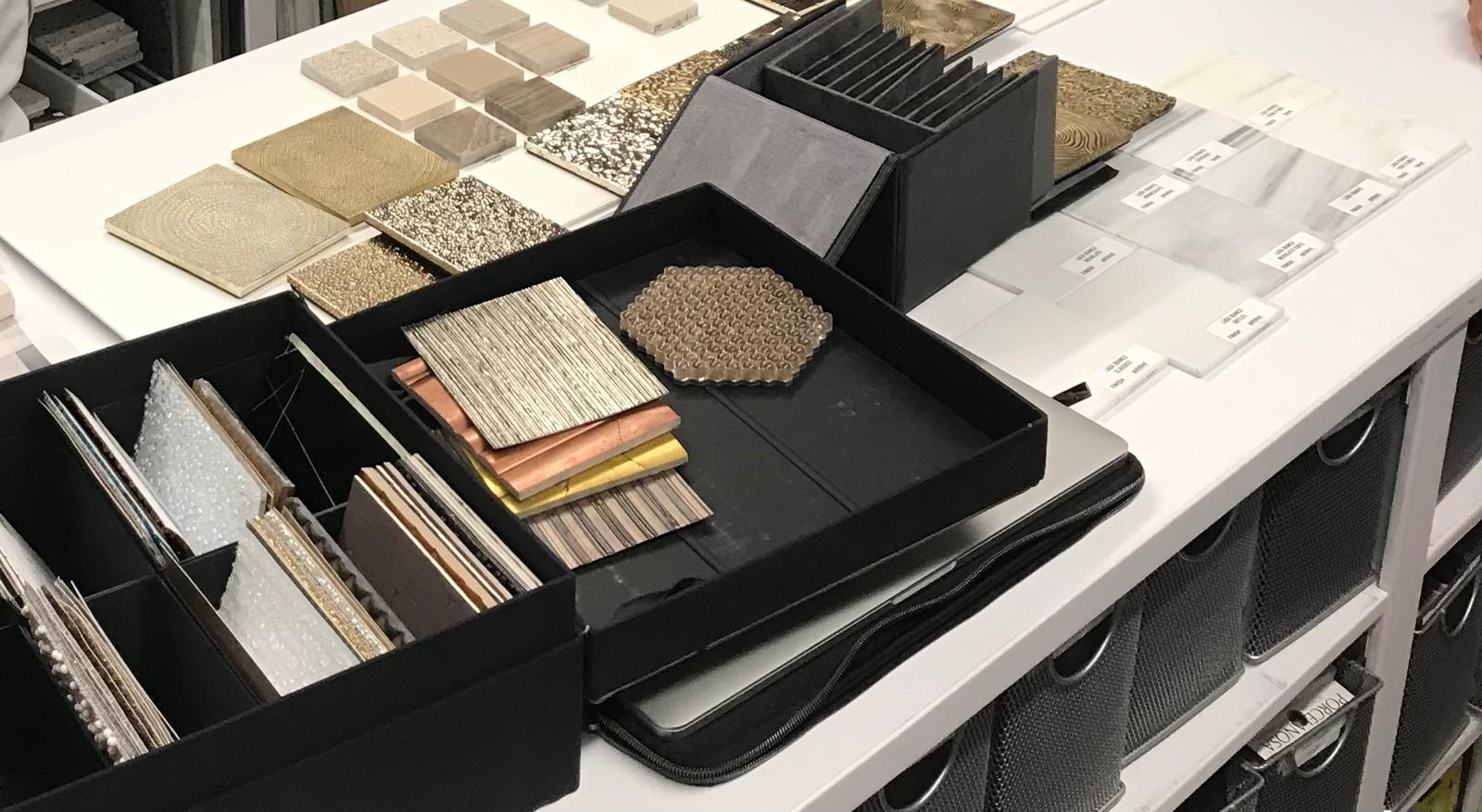
Twelve-by-twelve-centimetre stone samples of Lasa Bianco Vena Oro lay on the long conference-room table. A workshop with more than 20 architects, divided into 4 groups. The task sounded simple: decide what would be in range for their large-scale project — and what would not.
From the samples, three groups emerged: yes, maybe, absolutely not. Discussions about transitions, about gentle veining, about what makes sense for the lobby of the planned building.
What the architects did not know: all the samples came from a single slab. Cut in a tight grid, spaced exactly 12 cm apart.
More than 20 Sample Pieces. But Only One Slab.
After the sorting, I placed a photograph on the table. It showed the slab in full size — and on the photograph the numbers were visible, one per sample.
The reaction was audible.
Because the cut-to-size dimension intended for the project could not be matched by any of the four groups' ranges. Why? Nature has set a limit on the beauty of Vena Oro. The larger the panel sizes, the wider the range has to be.
What sounds at first as unacceptable is also exactly the beauty of natural stone. We are not talking about checkerboarding or hard transitions — we are talking about colour nuances within the material that the eye only registers as disruptive when small samples are placed side by side, or when slabs are wrongly cut. With the right transitions, with blending that respects natural limits, surfaces emerge that are beautiful and harmonious in themselves. But this requires knowledge — expertise about the chosen stone, the quarry, the current extraction conditions.
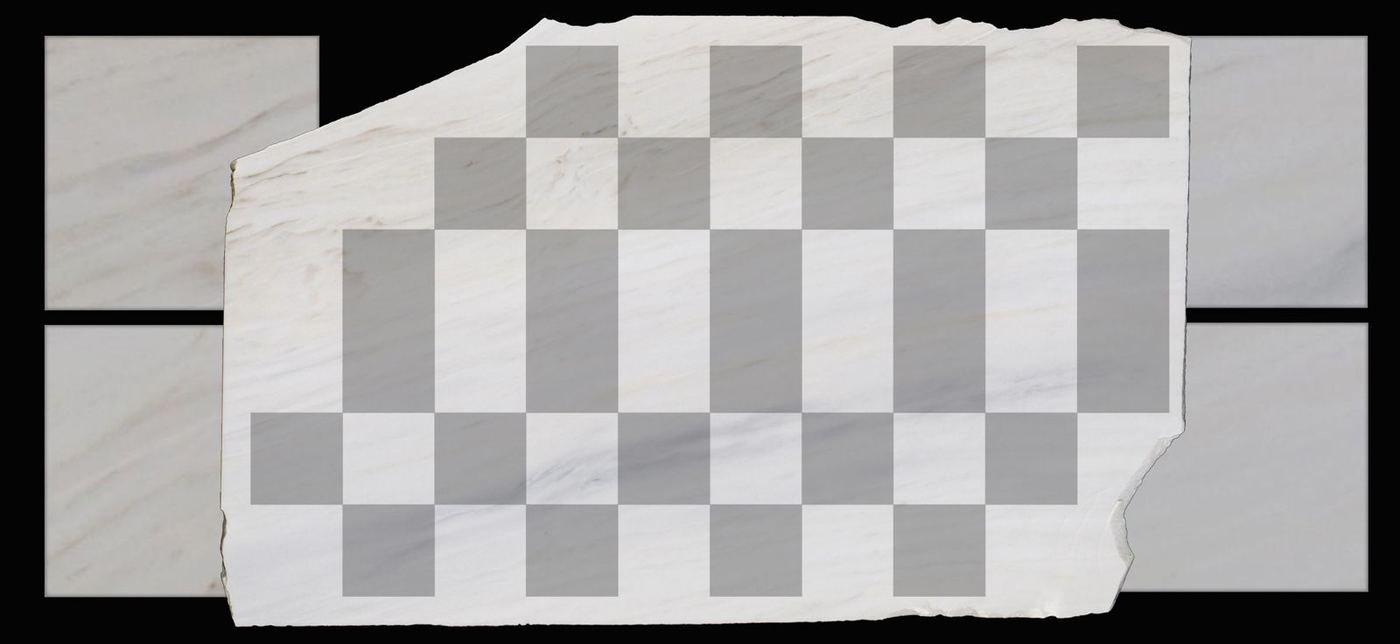
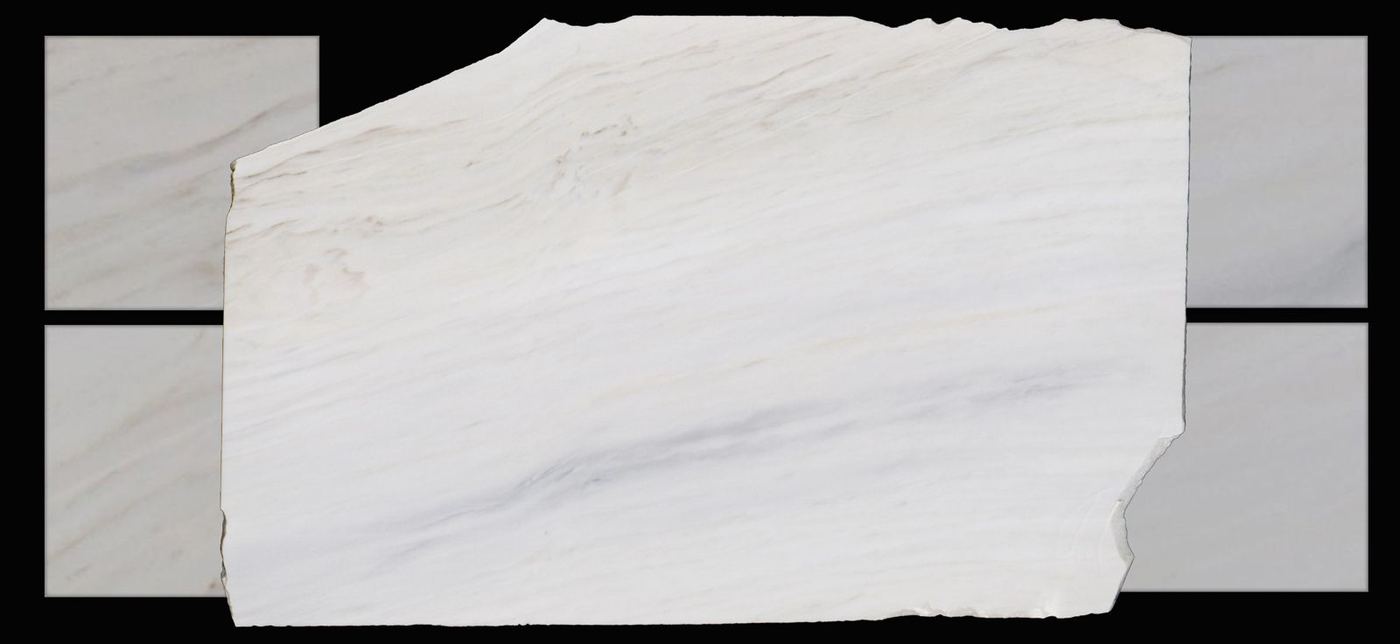
Back at the conference table: what had been sorted out as unacceptable lay, in many cases, less than 30 cm from what had moved into the yes-pile as perfect. One architect looked at her sorting, then at the photograph. Then she said aloud what everyone was thinking:
„I would have rejected my own slab."
She recognized for herself that her project, in this form, was no longer realizable. Not because she was careless in defining the range. But because a 12×12 cm sample is an indicator — not a proof for the project.
Deciding 2,200 m² with a 12×12 cm sample — is that a good idea?
A slab is a harmonious composition of nature — millions of years old. The veining runs continuously and tells the genesis. From this come colour nuances that become noticeable in small samples placed side by side. When some areas are marked as acceptable and others not, three things happen at the same time:
-
1
WasteThe area in between becomes scrap.
-
2
Transitions that visually jumpThe accepted fields have to be placed next to each other without the flow that originally connected them.
-
3
BoundariesThrough which the requested cut sizes can no longer be realistically produced.
In practice the picture is this: a tight range specification quickly leads to 60 % waste and more. That means a plus of 40 % on material costs alone. A range that is calculated to be economically sound should aim for under 20 % waste. (Numbers from DDL practice at Lasa Marmo and comparable projects.)
From an economic perspective, design and stone should always meet from two sides: the design intent and the natural properties of the chosen stone. Both require knowledge, both require experts.
The solution is not more samples — it is the scale
What developed in the workshop was an understanding for the exchange of knowledge in the project. The question „Which sample represents the range?" needs the prior definition: „In which size will the stone be needed?" That is a mandatory specification when requesting from stone producers. A statement like „Vena Oro samples for 2,000 m²" proves the quantity — but not the quality that has to be supplied.
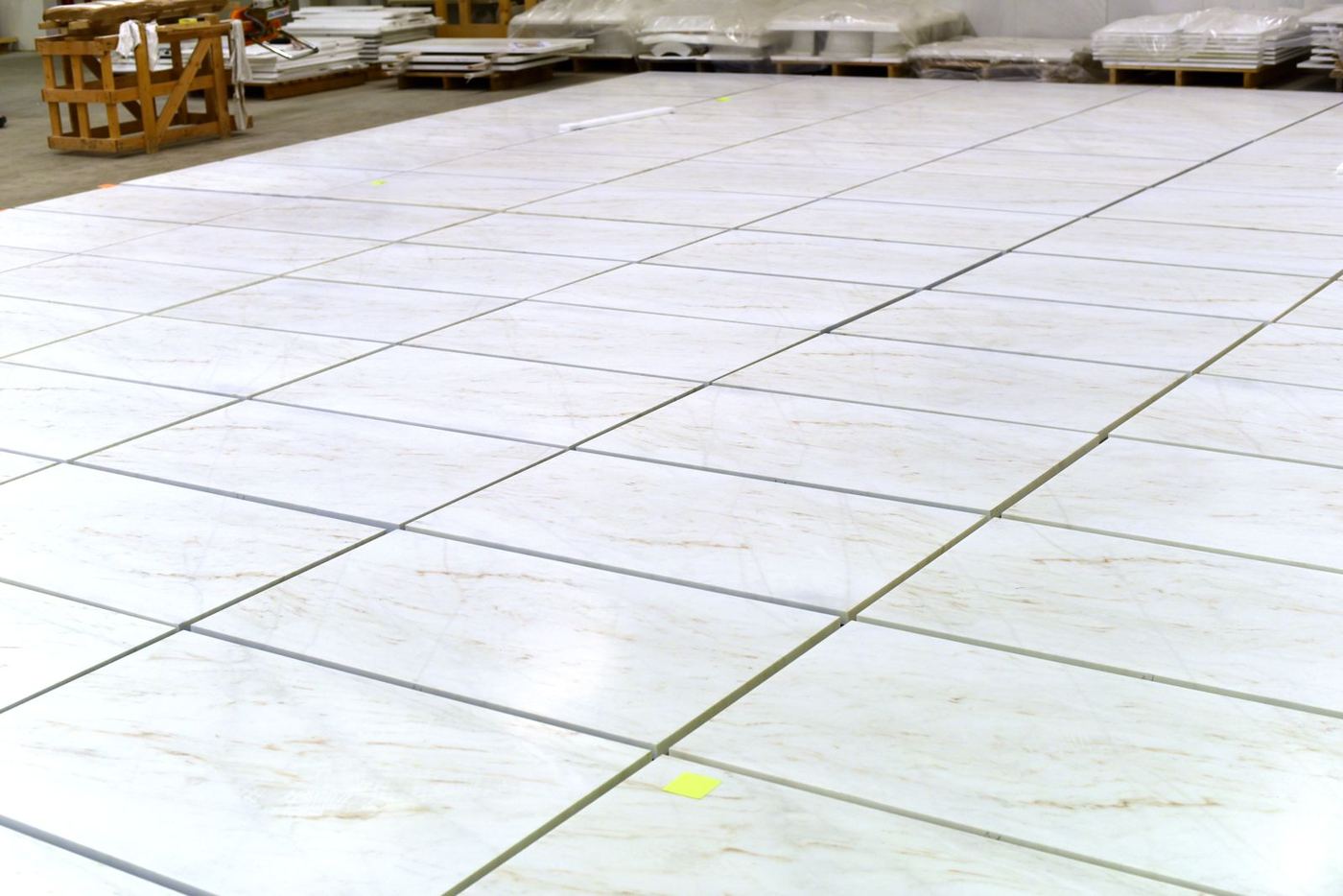
With Digital Dry Layout this exact change of scale takes place. The slab is photographed at high resolution, every panel visible 1:1. The architect lays the layout out digitally, sees an early mock-up surface, and at the end controls the entire surface with minimal effort — together with everyone involved. Range decisions are made through the digital mock-up — at the same scale on which the project will later be built. At this level both sides can calculate precisely — risk as a cost-driver in the project is reduced, together with cost certainty and therefore project certainty.
Lasa Marmo today runs no natural-stone project without Digital Dry Layout. Not because it is a nice add-on — but because it is the only tool that brings architect and quarry to the same scale before anything is cut.
What we see regularly in projects: the range becomes wider. Not because architects suddenly become careless — but because the overall image allows transitions that the single sample does not suggest.
One of the workshop architects expanded his range by about 70 % after the session. The project saved roughly 30 % in material costs — and the result was a more natural, calmer wall image than the tight sorting would have produced.
Three Questions for Your Next Natural-Stone Selection
-
1
Am I looking at a sample, or at the slab reality?What is the scale of this sample — and at which scale will the project actually be built?
-
2
Do I get an image of the actual slabs before the range decision?Not a stock photo, not a library sample — but the actual slabs.
-
3
Am I open to a wider range when the overall image works?Or am I defending a selection that only worked in the library?
The simplest rule: before anything is cut, see the layout digitally — once. That avoids the sentence every fabricator in natural stone knows — „I never ordered it like this" — after the cut or on the construction site, when nothing can be changed anymore.
And if you stumble on one of the three questions — just reach out to me.
Planning a natural-stone project?
Book a conversation — don't rely on the sample alone. We will go through your project together, clarify the range question and check whether a digital mock-up gives you and everyone involved more certainty for your venture.