Inventory Management Natural Stone: Why Standard ERP Fails with Unique Items
Standard ERP manages goods as SKUs: "Black granite, 47 pieces." Natural stone does not work that way — every slab has its own veining, its own dimensions, its own value. Three real-world examples show why slab-based systems are becoming the industry standard.
Why Standard ERP Fails with Natural Stone
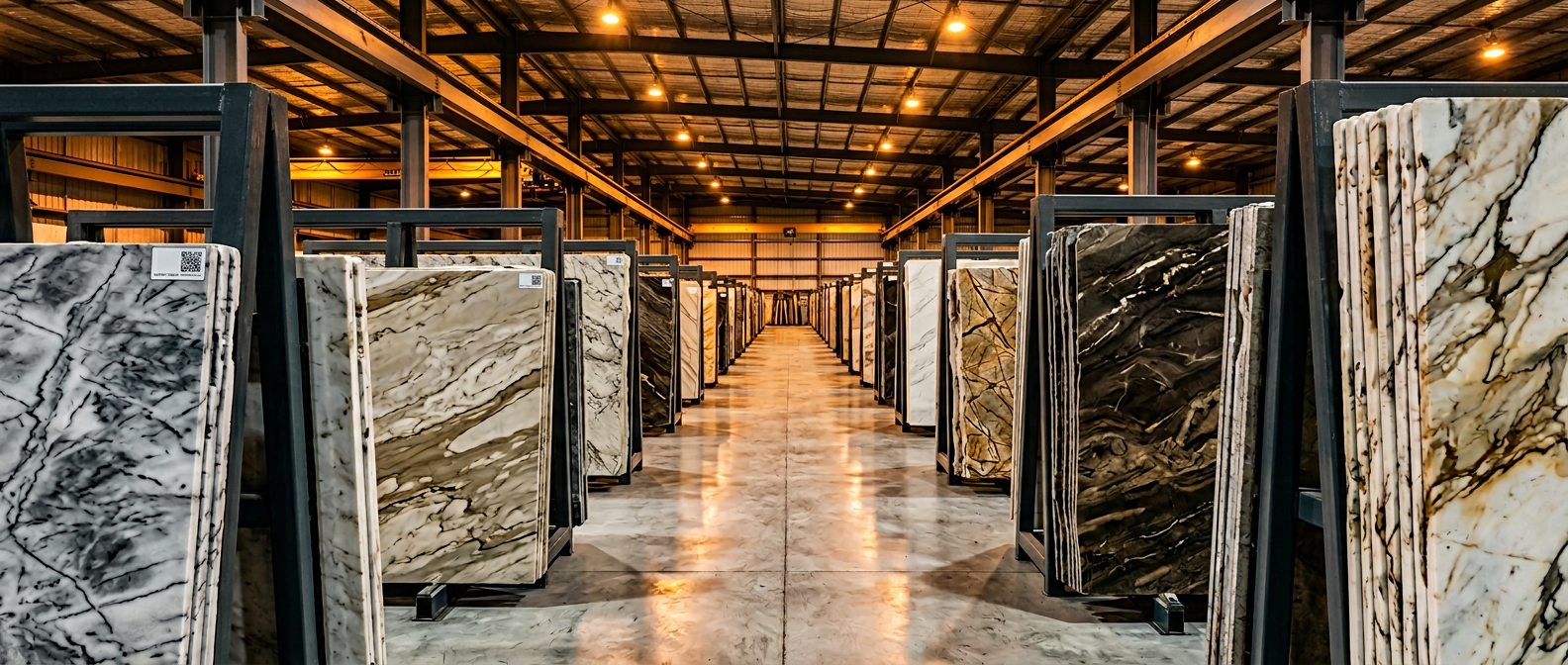
A standard inventory management system handles stock as SKUs: article number, quantity, storage location. That works for screws or tiles. Not for natural stone. Two Calacatta slabs from the same block can differ so much in veining, color gradient, and inclusions that an architect accepts one for a project and rejects the other. A SKU-based system only sees "Calacatta, 2 pieces" — which slab the architect means remains invisible.
In practice, multiple quotes involving the same slabs run simultaneously. Different projects, different architects, but the same inventory. When two customers accept the same slab, a double allocation occurs — and in the worst case, a double sale. This is not an isolated incident but a systemic risk with manual management. The cause is almost always the same: a lack of real-time transparency. Anyone managing inventory via Excel or legacy software loses oversight as soon as three quotes are open simultaneously.
On top of that, there is a structural problem: many operations work with ten or more separate systems — inventory in Excel, quotes via email, orders in one software, accounting in another. Every media break costs time and creates error sources. The owner who needs the full picture has to switch between five programs to understand where the business stands.
What Slab-Based Inventory Management Does Differently
Every slab recorded as a unique item
Instead of "Black granite, 47 pieces," every individual slab is recorded with photo, veining, surface finish, dimensions, and source block. The architect sees on screen the exact slab that will be delivered — not a catalog image. For international projects, this is often the only practical way to select materials without visiting the warehouse.
Location hierarchy instead of shelf slots
Natural stone is not stored in small-parts shelving. Slab-based systems map where things physically stand: warehouse, rack, slot, block number. Anyone operating multiple locations — indoor warehouse, outdoor yard, showroom — sees the full inventory in one system. Barcodes on every slab enable assignment via handheld scanner, even by staff without IT experience.
Audit trail instead of tally marks
Every status change of a slab is documented: Available, Reserved, In Production, Shipped, Sold. This is not a convenience feature — for high-value unique items, it is business-critical. The owner sees the inventory value in real time, the tax advisor gets a reliable stocktake, and the customer always knows where their slabs are.
What Stone Fabricators Actually Experience When Switching
Tessa Stones, a US subsidiary of an Indian natural stone company with around 80 varieties in stock, completed the switch from pure QuickBooks to barcode-based slab tracking in two to three weeks. The result: duplicate entries eliminated, real-time transparency across all slabs, and financial accuracy matching physical inventory for the first time.
At Granimor in Switzerland, the managing director still remembers walking through the warehouse with a paper checklist twenty years ago. Today every slab is captured by scanner, and stocktaking is done in a fraction of the time. What convinced him most: the inventory valuation is directly linked, and the reports for the tax authorities come from the system instead of being compiled manually.
Slab-based inventory — from recording to quoting
Example: A new delivery of Calacatta arrives. The employee scans every slab with the handheld scanner app, and the system creates a record with photo, dimensions, and location. The next day, sales creates a quote with three of these slabs — they are automatically reserved. The customer accepts two, and the third is released. No phone call, no Excel reconciliation, no double-sale risk. DDL maps this entire workflow in one system: recording, inventory, quoting, reservation.
Discover the online inventoryThree Steps to Slab-Based Inventory Management
Stocktake: What is actually in the warehouse?
The first step is not the software rollout — it is an honest stocktake. How many slabs are actually in the warehouse, and how many of those does the current system know about? Operations switching from Excel regularly discover remnant slabs that are physically present but not recorded in any system — available, but invisible for sales.
Photograph, tag, scan
Every slab gets a barcode. Photo, dimensions, and origin are recorded once and are then visible to everyone on the team — via tablet, phone, or desktop. Industry experience shows: the initial capture takes one to three days depending on inventory size. After that, every new slab is recorded upon arrival, and the effort drops to minutes per unit.
Link inventory to quotes
The biggest leverage comes when inventory does not stand alone. When a quote references specific slabs and these are automatically reserved upon acceptance, double-selling is ruled out at the system level. Industry data shows that inventory costs can drop by 30 to 40 percent in the first year — not through less stock, but through fewer forgotten, double-sold, and misallocated slabs.
Unique products need a unique-product system
Natural stone is not a mass-produced product, and inventory management must not treat it like one. Standard ERP maps quantities — slab-based systems map individual pieces, with photo, veining, and seamless traceability. The technology exists, implementation is achievable in weeks, and the return shows in the first year.
Further reading: Digital customer service, Software for stone fabricators and DDL online inventory in detail.
Explore DDL Solutions


Ready for slab-based inventory management?
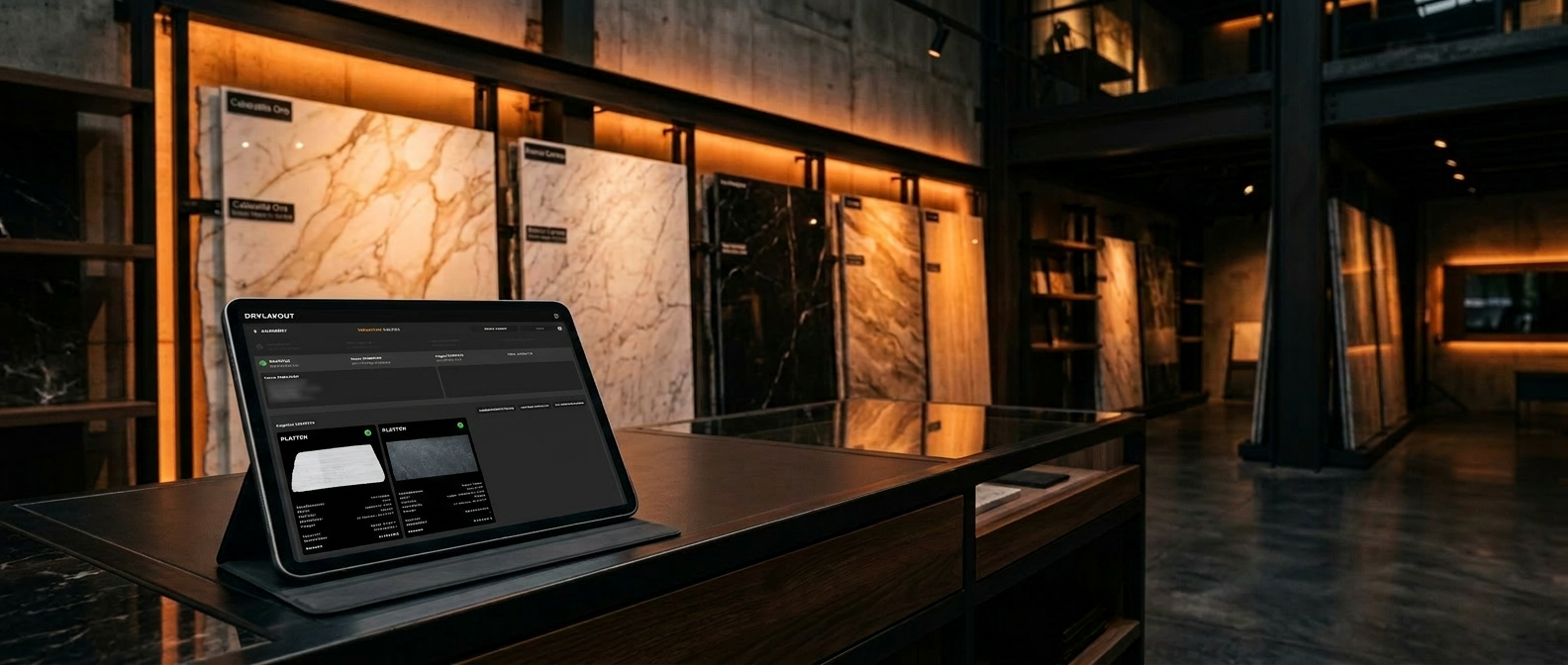
Jan Keller shows how natural stone businesses switch their inventory management from Excel to a slab-based system — hands-on, risk-free, in weeks not months.