AI in the Natural Stone Industry: Why Digitalization Is the First Step
Artificial intelligence dominates headlines — and the natural stone industry is no exception. From predictive machine maintenance to automated quality control, the promises are compelling. But for most stone businesses, the path to AI doesn't begin with algorithms. It begins with a digital foundation.
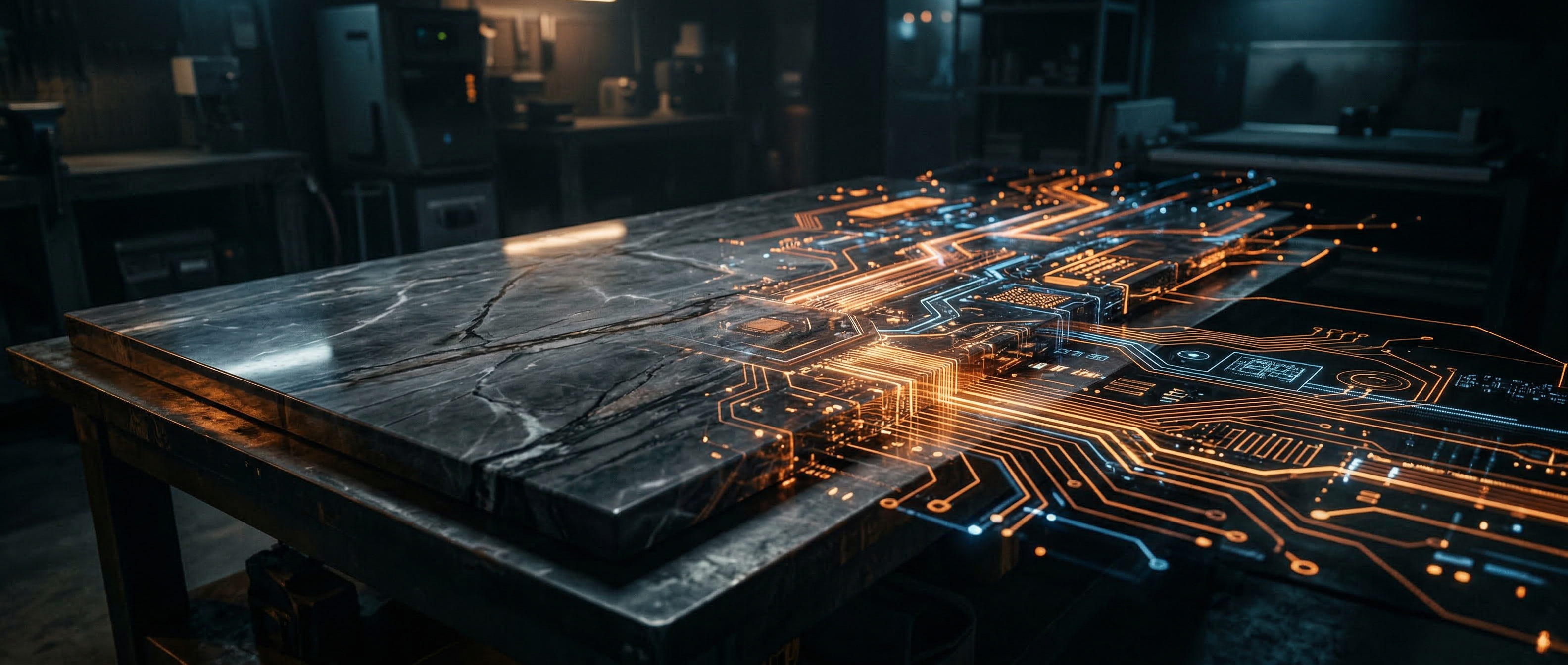
The AI Conversation Reaches the Stone Industry
According to recent surveys, 78 percent of companies worldwide already use artificial intelligence in at least one business function. In the natural stone industry, reality looks different. Many businesses still operate with spreadsheets, paper-based inventory systems and manual quoting processes.
Between what is technologically possible and what happens in daily operations, there is a significant gap. Yet there is no shortage of concrete use cases.
The US trade publication StoneWorld recently dedicated a detailed analysis to the question: Where should stone fabricators start with AI? The answer is surprising. Not with the latest software, but with business objectives. Which problems cost the most money? Where do the most errors occur?
Only when these questions are answered can digital tools be deployed effectively.
Progress is visible on the machinery side as well. CMS North America is integrating AI-powered sensors into its stone processing machines. The system monitors spindle times and tool vibrations, detects wear early and reports maintenance needs before a machine fails.
"Our focus, honestly, is helping the small guy grow," says Alex Bores of CMS. Predictive maintenance is tangible — but it requires machine data to be captured and connected digitally.
Three Areas Where Digitalization Delivers Immediate Results
Inventory Management
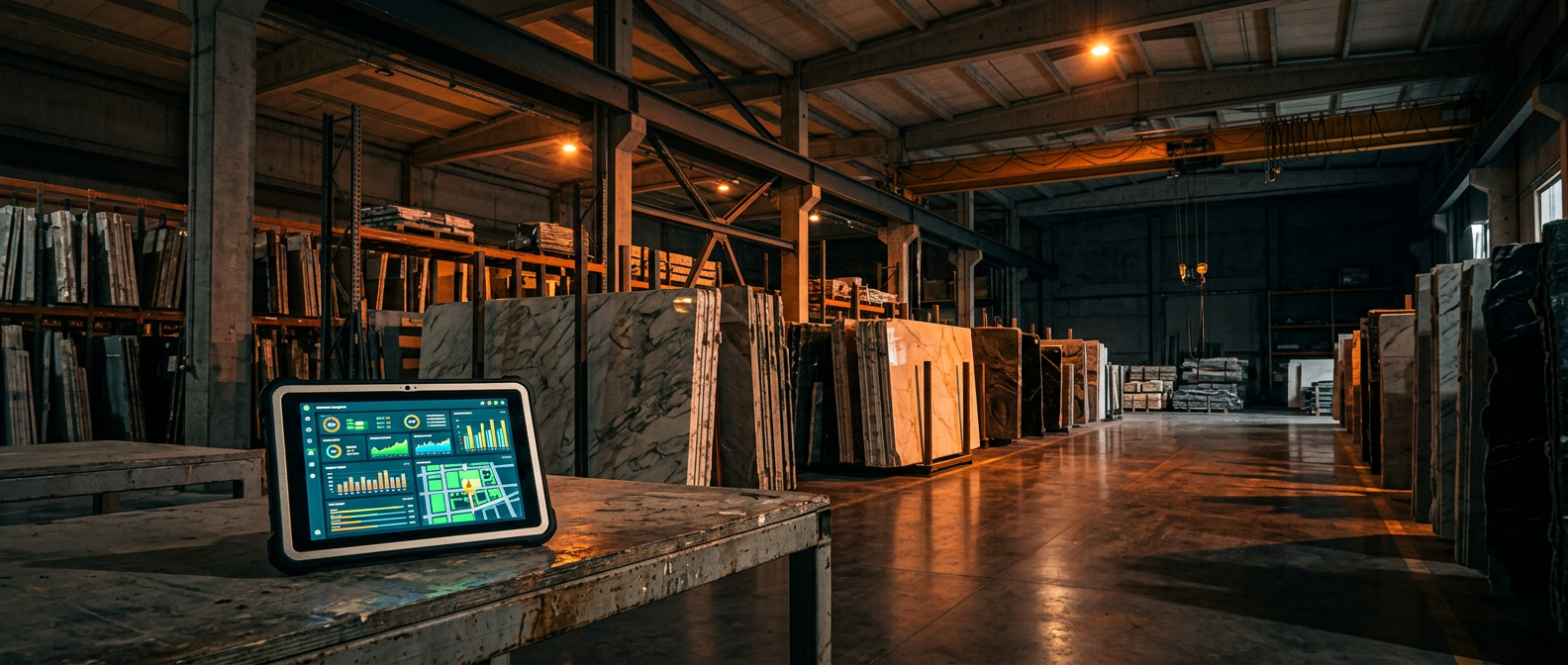
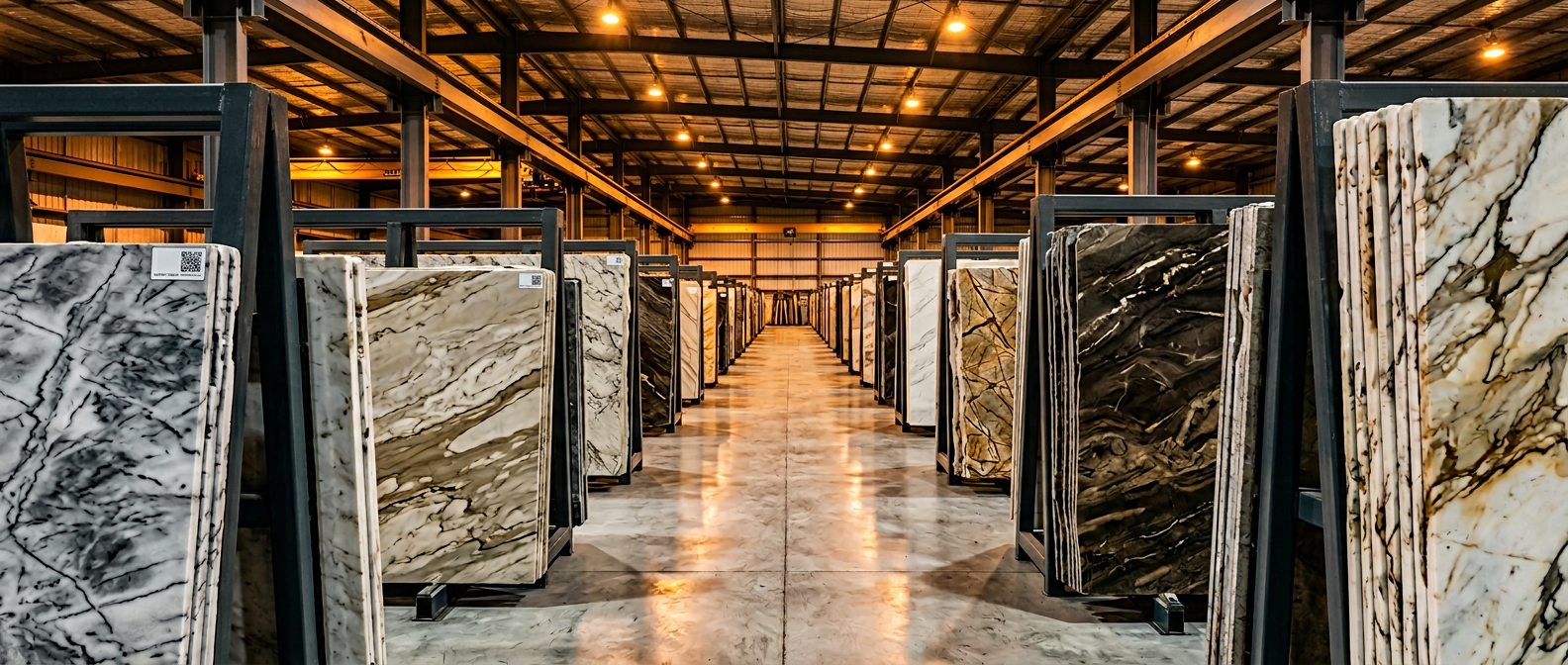
Every slab is unique — digital inventory systems reflect that. Real-time stock levels, location tracking and movement history replace spreadsheets.
Quoting and Customer Service
Digital quoting workflows compress the process from days to hours. Online confirmation by customers — including partial quantities.
Material Traceability and Sustainability
EPDs are increasingly required in construction. Complete digital documentation from quarry to delivery prepares businesses for upcoming requirements.
Why AI Cannot Function Without Digital Data
Artificial intelligence is only as good as the data it works with. An AI system designed to optimize inventory needs structured, current stock data. A predictive model for maintenance intervals needs real-time machine data.
An automated quoting system needs a clean product and pricing database. Without this foundation, AI projects remain theoretical.
The natural stone industry therefore faces a clear sequence: first digitalize, then automate, then add intelligence. This is confirmed by the StoneWorld analysis, which proposes a three-phase roadmap.
Phase one is AI augmentation — training teams, introducing internal tools, boosting productivity. Phase two introduces automation: quoting processes, workflow optimization, voice assistants. Only phase three connects AI with ERP systems to optimize material utilization and production planning.
The market for construction ERP software is currently growing at 7.7 percent annually and reached a volume of 3.7 billion US dollars in 2024. 68 percent of construction firms are using or planning to deploy AI technologies. The momentum is real — and the natural stone industry should not stand on the sidelines.
A Digital Foundation for Stone Businesses
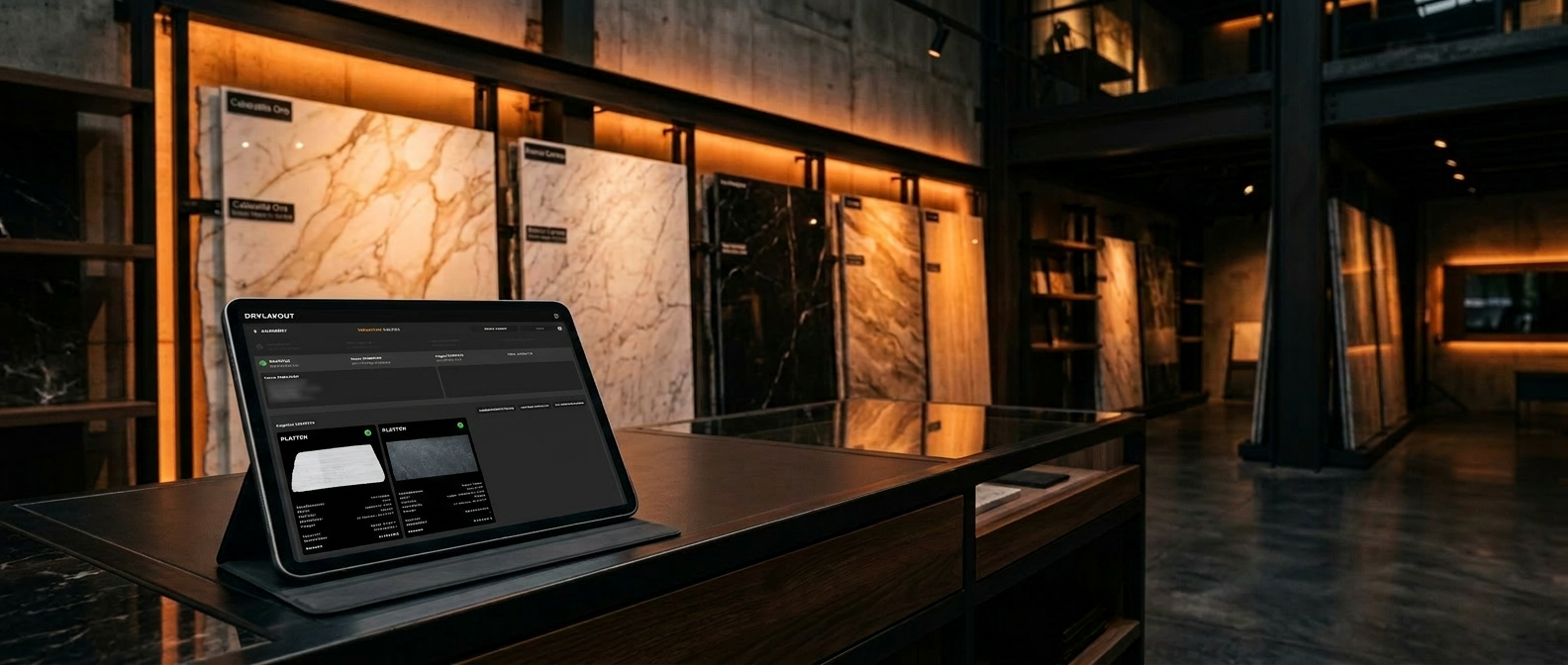
Platforms like DryLayout demonstrate what an industry-specific digital foundation can look like: slab-based inventory management with DXF/CAD import, automated quoting workflows with online confirmation, and complete material traceability from block to finished slab. Not a generic solution, but built for the specific requirements of the natural stone industry.
Learn moreThree Steps to a Digital Foundation
Analyze Processes
Which workflows are manual? Where do delays and errors occur? An honest assessment reveals the areas with the greatest leverage.
Digitalize Core Processes
Inventory, quoting and customer contacts form the foundation. Industry-specific software captures the unique aspects of natural stone correctly.
Leverage and Expand Data
Digital processes automatically generate data: movement histories, quote conversion rates, throughput times. The foundation for automation and AI.
Conclusion: First Digital, Then Intelligent
AI will transform the natural stone industry — in machine maintenance, quality control, material optimization and customer service. But for the majority of businesses, the greatest lever is not AI itself, but the digitalization of core processes. Those who digitally map inventory, quotes and customer relationships today work more efficiently immediately. And simultaneously build the data foundation that will make AI truly powerful in the future.
The natural stone industry is traditional — and that is a strength. Craftsmanship, material expertise and personal customer relationships remain decisive. Digitalization does not replace these qualities. It makes them more visible, faster to access and less prone to errors. The first step is not an AI project. The first step is the decision to replace paper with data.
Explore DDL Solutions
Ready for the first step?
A conversation about digitalization in your business — no commitment, industry-specific expertise.